I'm a procurement manager at a 320-person packaging plant. For the past six years, I've owned the MRO budget—about $210,000 a year—and I've tracked every order in a cost-tracking spreadsheet. In Q3 2023, a 40-cent O-ring failed on a filler line. The line was down for four hours. After labor and lost output, the total came to $9,400.
The O-ring wasn't the problem. The buying process was.
The Surface Problem: Parts Fail at the Worst Possible Time
When a sealant cracks, a pneumatic rubber wheel goes flat, or an O-ring splits, the first reaction is 'get a better part.' The second reaction is 'find a cheaper supplier.' I've watched both reactions turn a small replacement job into a capital expense.
Take the O-ring failure I mentioned. It wasn't an exotic application. The filler line runs at 70 psi. The fluid was a mild caustic cleaner. The part was a standard Buna-N O-ring. It failed because the supplier sent an old part that had been stored near a heat source for too long. The price was right. The specification was wrong.
That's the moment most people look for a new part. They don't look at the system that let an unverified part into a production line.
The Real Problem: You're Comparing Prices, Not Materials
The assumption is that all rubber parts with the same shape are interchangeable. The reality is that a material name is not a material specification. A 70-durometer EPDM O-ring and a 70-durometer FKM O-ring look the same in a photo. One is rated for brake fluid. The other swells. If you don't know which one you're buying, the price is nonsense.
People think expensive vendors deliver better quality. Actually, vendors who deliver quality can charge more. The causation runs the other way. Price follows reliability; reliability doesn't follow price.
Let me answer a question I hear almost every quarter: What is TPU rubber? The name is misleading. TPU is not rubber. It's a thermoplastic polyurethane elastomer. It can be injection molded and recycled, unlike thermoset rubber. But it also softens at heat levels that a properly vulcanized rubber part would tolerate. If someone specs 'TPU rubber' for a pneumatic rubber wheel, they may be asking for a manufacturing convenience, not a performance requirement.
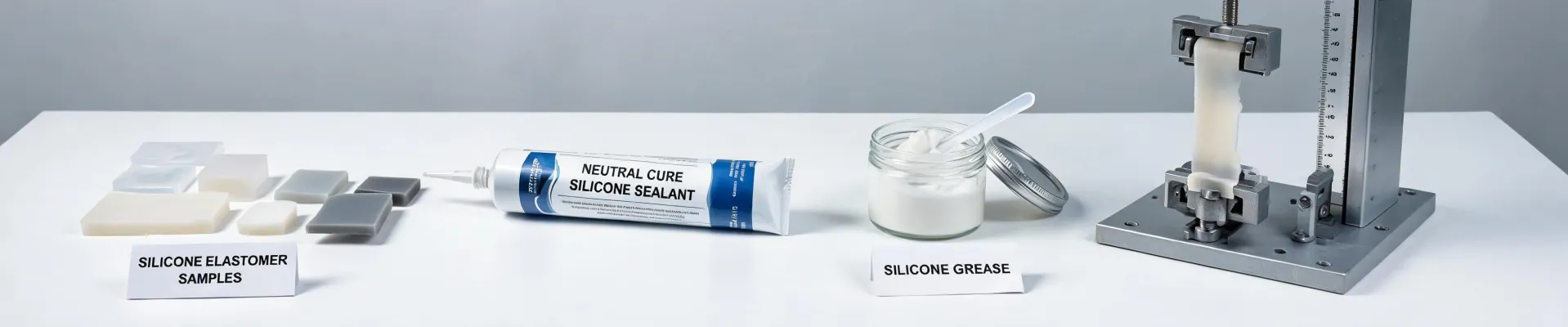
The same confusion shows up with silicone. The spec might say 'dow corning silicone 785.' That is a specific building sealant from Dow's silicone product line. It is not a generic silicone adhesive. If a distributor can't show you a datasheet and a lot number, you're not buying Dow Corning 785. You're buying something that looks like it.
The Hidden Price of a 'Cheap' Buy
I went back and forth for a week between an authorized Dow Corning silicone distributor and an online marketplace for a sealant order. The marketplace quote was 22% lower. The distributor included traceability, a storage certificate, and a technical rep who answered my questions. My spreadsheet didn't have a column for 'phone call that saved a shutdown.' I almost ignored it.
Then I remembered the O-ring.
Here's a concrete example. The OEM spec for a hydraulic press called for a Parker 2-214 O-ring from the O-ring handbook. We bought a cheaper equivalent. The O-ring handbook is clear: you have to match compound, temperature, and compression set. The cheap part failed in six weeks. The replacement cost $1.10. The labor was $175. The production loss was $3,100. The 'savings' on the original part was 60 cents.
Another facility asked us to source 'dow corning silicone 785.' A lookalike tube was half the price. It passed a visual check. It failed after one freeze-thaw cycle. Removing and reapplying it cost $2,300. The authorized product would have cost $580 more. I'd make that trade every time.
The same pattern showed up with a pneumatic rubber wheel on a floor scrubber. The wheel kept going flat. We replaced the tube three times. The real issue was a sealant that was incompatible with the rubber compound and the rim material. No one had asked for a compatibility table. The tube was fine. The specification gap was the problem.
The cost of a part isn't what you pay at the counter. It's what the part does to your operation after you install it.
The Fix: Buy From a Supply Chain You Can Audit
In my opinion, the fix is not 'buy premium brands.' It's 'make the cost of a bad buy visible.' If you're not tracking downtime, labor, scrap, and rework for every part, you're not comparing price. You're guessing.
To be fair, budgets are real. I've negotiated enough annual contracts to know that a 20% price difference matters. But I do not mean you should never accept a low quote. I mean you should calculate the consequence of the low quote before it becomes your problem.
When you buy from an authorized Dow Corning silicone distributor, you get traceability. You get the datasheet, the lot number, and a person who can tell you whether you need a sealant, an elastomer, or a lubricant. That's a procurement function, not a luxury. If the distributor can't answer 'What is TPU rubber?', they can't help you select the right material. They're a warehouse, not a supplier.
The O-ring handbook still sits on my shelf. I use it more than most people expect. The same logic applies to Dow Corning silicones, rubber wheels, and every other elastomer in the facility: get the material callout, verify the supply chain, and price the failure. Then decide.
On a qualified distributor's website, a search for 'dow-corning' should return product trees and datasheets, not a pile of lookalikes. If the search results stop at 'cheapest option,' keep scrolling.
The next time a quote looks too good, ask what happens when the part fails. If the answer is 'it won't,' you don't have a supplier. You have a gamble. I'd rather pay for a known part than a promise.