In February 2025, I replaced the same O-ring on a coffee machine for the third time. Not the same model of machine; the same physical machine. The part cost $4.50, the labor took 45 minutes, and my COO asked a fair question: why are we buying a $30 seal for a $400 machine and still hearing leaks?
At first I blamed the material. I figured if we upgraded everything to a premium elastomer, the problem would disappear. That's when I went down the rabbit hole of rubber, silicone, and fluoropolymer specifications. It changed how I buy everything. (Should mention: I'm an office administrator, not a materials engineer. I manage purchasing across 3 locations, roughly $260k a year, and I've learned most of this the hard way.)
The surface problem: 'just use a better material'
The recurring issue was O-ring failures in a food service area. A coffee machine kept weeping water around the valve stem. The previous admin had bought 'generic silicone O-rings' that were supposed to be food-grade. They weren't. The sheet said 'suitable for food contact' but there was no test report, no temperature range, no Shore A durometer. That's a red flag I've learned to respect.
I searched for a stronger material and found hydrogenated nitrile rubber (HNBR). Sounds serious. It is—but in the right environment. I put one in and it hardened after repeated steam cleaning. Why? Because I'd checked 'temperature' without asking 'steam exposure and additives.'
The deeper issue: compatibility, not price
The problem wasn't the material family. It was the lack of a spec. 'Silicone' can mean a soft 20 Shore A gasket or a harder 50 Shore A formulation for valve parts. The 'PTFE hose vs rubber' question came up during a washdown line rebuild. PTFE is nearly inert and smooth, but it's stiff and awkward to route. Rubber is flexible and cheaper, but its inner liner can swell if the cleaning chemical doesn't match. We had a hose that looked fine from the outside and was flaking inside because the weekly washdown attacked the tube. The operator said 'the hose looks fine.' The flush water didn't.
A TPU seal can be incredibly tough and abrasion resistant, but in a warm humid environment some TPU grades hydrolyze and crack. I didn't know that until a supplier gave me a comparison sheet. Better than nothing—but I wish I'd seen it before the failure, not after.
Why does this matter? Because the conversation isn't 'rubber vs silicone.' It's 'what is the part touching, how hot, how often, and for how long?' We bought a premium HNBR seal for a low-pressure water line. Expensive and wrong. A standard NBR would have lasted longer because the additive package was designed for water. The conventional wisdom says premium material always wins. My experience with hundreds of replacement parts suggests otherwise.
What the guessing cost us
I don't have hard data on industry-wide seal failures, but based on our own orders over five years, my sense is 15-20% of 'same as' replacements caused a second problem. Some were leaks, some fit, one was a batch of 'medical grade' tubing that wasn't traceable.
The worst incident was in 2024. We paused a product line for 11 hours because a rubber hose in a washdown station swelled shut. The manufacturer recommended PTFE or a specific HNBR compound. We used a cheaper rubber hose. The hose cost $38. The downtime and rework cost about $9,400—maybe $8,700, I'd have to check the spreadsheet. Either way, accounting noticed.
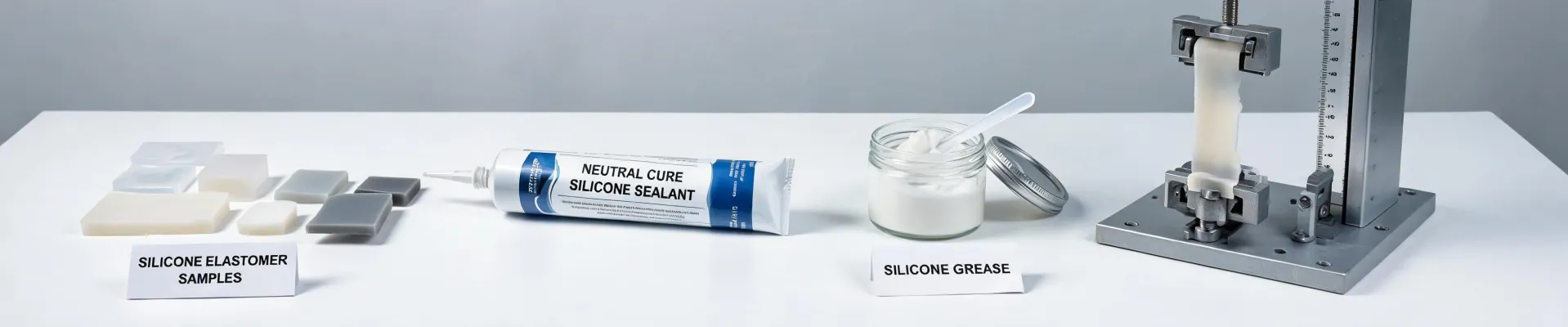
There's also a quieter cost: how it looks to the people we serve. We make devices that sit in front of customers. A stained seal or a mislabeled hose is not an operational detail; it's a brand signal. When we finally started using Dow Corning 111 for coffee machine o-rings, the difference was visible. The grease isn't just silicone lubricant; it's rated for food contact, low volatility, wide temperature range. It doesn't bake into a crust. Did customer feedback improve because of a little grease? Not on paper. Repair calls dropped, and the machine stopped looking like a problem.
What I changed (and what I'd tell another buyer)
We stopped buying parts by category and started buying by specification. Less exciting, but more reliable.
- Write down the actual operating conditions: temperature, fluid, pressure, cleaning cycle. If you don't know, ask the maintenance lead or the equipment OEM.
- Demand a datasheet and, if the claim is 'food grade' or 'medical grade,' ask for the test report. Per FTC guidance, a claim without substantiation isn't a spec; it's marketing.
- Follow the manufacturer's intended use. For coffee machines, that means Dow Corning 111 for coffee machine o-rings, not a tub of generic grease. For a validated medical device, that means the exact Dow Corning medical grade dispersion the design called for, not 'silicone fluid' from a different supplier.
- Remember that material families are trade-offs. HNBR is not 'super silicone.' TPU is not 'rubber plus.' PTFE is not 'rubber forever.' Each solves one set of problems and creates another.
I know I sound like a spec zealot. Maybe I am. But this shift saved us roughly $12,000 in parts and labor in the first year. Oh, and the coffee machine? The O-ring with the right durometer, the right grease, and the right installation is still dry after nine months.
One caveat: this worked for us because we're a mid-size operation with a maintenance lead who actually reads datasheets. If you're in a plant with constant chemical changes, your mileage will vary. But the lesson—specify first, buy later—has traveled well so far.