I'm going to start with an opinion that will annoy people who like clean procurement processes:
Most urgent material requests fail because of vocabulary, not because of supply chains.
In my role coordinating rush orders for industrial materials, I've watched more than 200 requests come through with one customer asking for a trade name and every supplier decoding it differently. After seven years, the pattern is clear: the request that starts with 'Dow Corning 111 silicone grease' usually ends with the right part. The request that starts with 'just silicone' often ends badly.
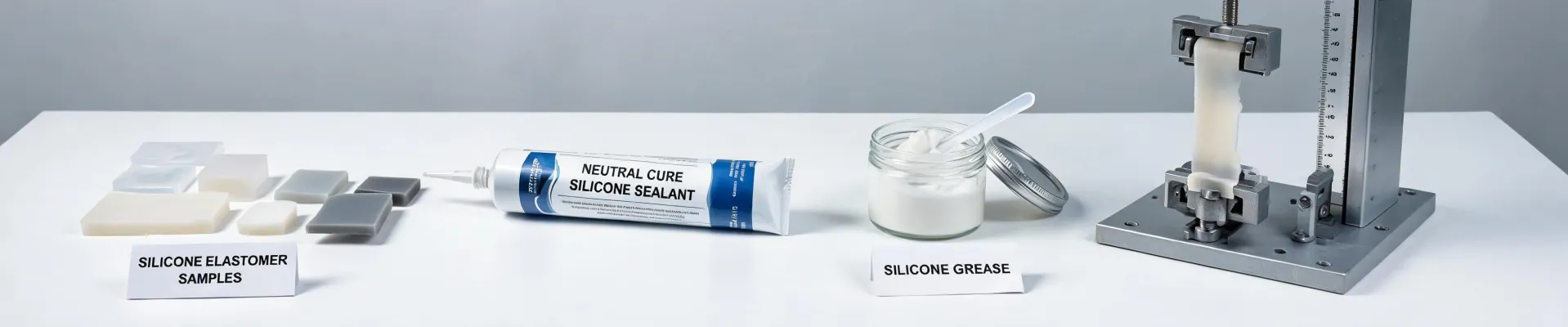
Here's the thing: Dow Corning is a brand, not a polymer. It's a useful brand because it has been tied to serious silicone engineering for decades. But when someone writes 'Dow Corning' without a product number, I don't know if they mean a sealant, a grease, a potting compound, or an elastomer. The exact product matters. Dow Corning 111 silicone grease is a specific formulation used for valves, O-ring lubrication, and many sealing jobs. It is not a generic tube of silicone. It is not a release agent. It has its own consistency, temperature range, and compatibility behavior.
The conventional wisdom says trade names make ordering easier. In my experience, they don't. They offload interpretation to someone else, and that someone else is usually working from a different assumption.
Black Teflon is not a material specification
Take 'black Teflon.' The first time a client asked me to supply black Teflon by the next morning, I was tempted to guess. Good thing I didn't. In many cases, black Teflon is PTFE with carbon black added. But it can be a PTFE film, a PTFE tube, a woven PTFE gasket, or a coated fabric. The word 'black' changes the filler content, and filler content changes wear. Saying 'Teflon' is like saying 'Kleenex.' You know the product family, not the exact specification.
When someone calls me with a failed seal and says the original was black Teflon, I ask three questions. Was it a sheet? A molded part? A coating? What property actually failed? And what was it contacting? Those questions are not delays. They're the difference between an order and a repeat emergency.
Honestly, I'm not sure why we keep saying black Teflon when PTFE is not inherently black and Teflon is a trademark. My best guess is that it sounds more concrete. It isn't.
Oil polyurethane and polystyrene: one category, two different answers
The same logic comes up every time I see 'oil polyurethane.' If you're talking about floor coatings, oil-based polyurethane is a curing finish. After it reacts, it becomes a thermoset coating. If you're talking about a polyurethane elastomer, it might be a thermoplastic polyurethane that melts and can be processed again. So what's the answer to 'is polyurethane thermoplastic or thermosetting'? It depends on which polyurethane. The material name alone is not enough.
Polystyrene, on the other hand, has a direct answer. If you've ever asked 'is polystyrene thermoplastic or thermosetting,' here it is: polystyrene is thermoplastic. It softens when heated and hardens when cooled. It is not a thermoset. This matters because PS is still used in injection-molded parts, transparent packaging, and foam. If a design calls for prolonged high heat, the problem isn't whether polystyrene is thermoset. It's that you likely chose the wrong thermoplastic.
The fact that this question keeps coming up tells me people are trying to apply one category to a world with thousands of grades. That same instinct causes problems with silicone.
Dow Corning silicone breast implants and industrial grease: not the same material
People still search for 'Dow Corning silicone breast implants' because public memory of silicone is tied to that medical debate. I understand why: silicone in the body is a serious subject. But from a B2B materials standpoint, that phrase is a warning about over-simplification.
Implantable silicone and a valve grease like Dow Corning 111 may share a chemical family, but they are formulated and tested for completely different worlds. A medical implant has to survive inside living tissue. A silicone grease has to survive steam, pressure, and temperature. You would not use a grease in an implant, and you wouldn't use an implant gel to lubricate a valve. The word silicone is not a specification.
That lesson did not arrive by theory. It arrived through decades of regulatory attention, manufacturing discipline, and, yes, public controversy. The decades-old phrase 'Dow Corning silicone breast implants' still shows up in searches today because product categories and brand names can linger long after the engineering context changes. Fine. But if you are buying industrial materials, let that history remind you that molecular families are broad. Exact products are narrow.
What changed in material sourcing
Here's where I think the industry has evolved, and not everyone has caught up. Not long ago, if you called a distributor and said 'black Teflon' or 'oil polyurethane,' someone with twenty years of experience could translate. Those specialists still exist, but many ordering systems do not.
In 2025, order entry, inventory lookup, and spec matching often take your exact words at face value. A vague phrase doesn't get better as it travels through a procurement system. It just gets repeated with confidence. That's a new kind of risk. What was workable in 2019 can get expensive in 2025.
I'm not saying every brand name is dangerous. Use Dow Corning 111 silicone grease when that's the product you need. But add context. Write 'silicone grease for O-ring lubrication, high viscosity, chemical compatibility required.' If you need PTFE, don't ask for black Teflon and stop there. Ask for PTFE with the performance requirements the application depends on.
If you need a polyurethane coating, state the cure mechanism. If you need a thermoplastic elastomer, say so. If you're sourcing polystyrene, remember that it's thermoplastic, and then check whether thermoplastic is even the right choice for your environment.
So here's my rule after 200-plus rush orders: use the exact polymer family, product number, and intended use in the original request. Not because you're being pedantic. Because precision is fast. It turns a panic-mode inquiry into a one-line purchase order.
Does that mean trade names are useless? No. They're useful when both sides share the same reference point. But if there's any gap, the gap is where emergency orders come from.
And in my world, emergency orders are not a sign of a fast supplier. They're a sign that someone had to guess.