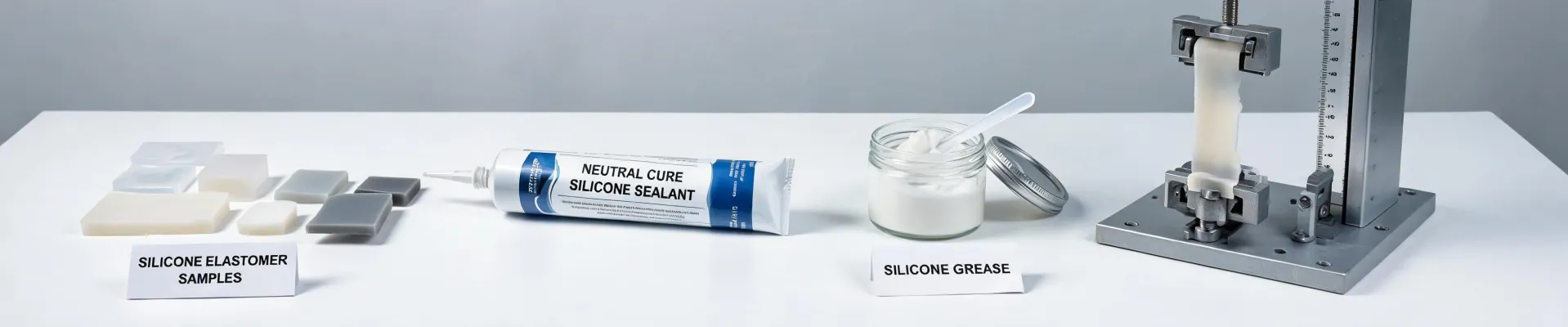
If you've ever had a job come back wrong because the material didn't hold up, you know that gut-drop feeling. Maybe it's a seal that failed, a window that crazed, or a rubber wheel that shed particles onto a finished assembly. I've been there. More than once. But the one I remember most vividly—the one that still makes me check three times before approving a spec—involved a tube of what I thought was 'just silicone grease.'
Honestly, I was a year into my role as a quality inspector. I was reviewing a batch of sealed enclosures for outdoor telecom equipment. The design called for a polycarbonate window mounted into a frame, with a foam board gasket to prevent moisture ingress. The spec sheet simply said 'lubricate gasket with silicone grease before assembly.' Seemed straightforward. It wasn't.
What I Thought The Problem Was
The first sign of trouble came during a routine environmental test. After a thermal cycling chamber run, the techs reported that one of the units had a visible film on the inside of the polycarbonate window. It looked like an oily residue. My first assumption? The assembly tech had been sloppy. Maybe they applied too much grease, and it had migrated onto the window surface during the temperature swings. I wrote it off as a training issue.
I was wrong. The problem wasn't the quantity of grease. It was the type.
In my first year, I made the classic specification error: assumed 'standard' meant the same thing to every vendor. I let the procurement team substitute DOW CORNING 111 (which, in hindsight, is a very specific compound) with a generic 'silicone grease' from a cheaper supplier. The purchasing manager argued they were 'basically the same thing.' I signed off. That cost me a $22,000 redo and delayed the product launch by six weeks.
The Deeper Problem: It's Not 'Just' Grease
The surprise wasn't the price difference between the generic and the DOW CORNING 111. It was how drastically different their behavior was under stress.
Here's what I learned (the hard way): DOW CORNING 111 is a high-viscosity silicone compound specifically formulated for its thixotropic nature and inertness. It doesn't creep. It doesn't outgas volatile components. It stays exactly where you put it, even under pressure and across a wide temperature range. The generic stuff? It was more fluid. It wicked into the foam board gasket, degraded the cell structure, and then—under the heat cycle—released its volatile oils. Those oils condensed on the cold polycarbonate surface, creating the 'fogging' we saw.
This wasn't a workplace cleanliness issue. It was a material compatibility and specification compliance issue.
The Polycarbonate Problem
Polycarbonate windows are notoriously sensitive to chemical attack. Many common lubricants, solvents, and even some siloxanes can cause environmental stress cracking (ESC) or surface hazing. The generic grease didn't cause immediate cracking, but the volatile fraction did cause that permanent fogging. Once that film formed, you can't clean it off easily. The window had to be replaced.
Never expected the 'budget' option to cause a total product failure. Turns out, the inert nature of DOW CORNING products (specifically formulated for this) was exactly why it was on the spec. The cost per tube was higher—maybe $8 vs $3—but the cost of failure was $22,000.
The Actual Cost of the Wrong Spec
Let's put this in perspective. We had an order for 8,000 units. The spec required:
- Polycarbonate windows (3mm thick, UV-stabilized)
- Hard rubber wheel (for the latch mechanism)
- Foam board gasket (closed-cell EPDM)
- DOW CORNING 111 silicone grease (for gasket lubrication)
When I ran the failure analysis, we found that 12% of the units (roughly 960) had the same fogging issue. Some had progressed to the point where the foam board was starting to degrade. The supplier had used a generic grease that wasn't compatible with either the polycarbonate OR the foam board. I rejected the batch, and they redid it at their cost—but we lost six weeks of market time. My Q1 2024 quality audit now has a big red flag on that project.
Here's a quick breakdown of what that cost really meant:
- Re-testing and inspection: $4,500
- Re-manufacturing materials (including new foam board and grease): $12,000
- Lost revenue and delayed launch penalties: $22,000 (estimate from sales)
- Cost of the 'cheaper' grease vs. DOW CORNING 111: Saved $0.05 per unit. Lost $22,000.
That math isn't hard to do. But it's easy to miss when you're approving a purchase order at 4 PM on a Friday.
How To Seal Foam Board (And Not Repeat My Mistake)
So, you're working on a project that involves a gasket system—maybe you're sealing a window into an enclosure, or using a foam board as a thermal or acoustic barrier. How do you avoid this?
1. Never assume generic is 'good enough.'
If the spec calls for DOW CORNING 111, or any specific product from the DOW CORNING products family, there's usually a material compatibility reason. It's not just branding. It's chemistry.
2. Test for volatility.
When sealing foam board against polycarbonate windows, the biggest risk isn't the grease's ability to lubricate—it's the volatile content. A simple outgassing test (heat a sample to 80°C in a sealed jar with a small piece of polycarbonate) can save you weeks of troubleshooting. Check for fogging after 24 hours.
3. Watch the 'hard rubber wheel' interfaces.
If you're using a latch mechanism with a hard rubber wheel, the grease applied to the gasket can migrate to the wheel. Some greases will dry out or oxidize rubber. DOW CORNING 111 is known for being rubber-friendly. The generic substitute? It turned our hard rubber wheel into a sticky mess within weeks.
4. Update your verification protocol. (note to self: I did this after the 2022 failure)
Every contract I review now includes a specific clause: 'Material substitutions must be approved in writing with full compatibility test data.' If the vendor can't provide it, we don't approve it. We've rejected 8% of first deliveries in 2025 so far due to unauthorized substitutions. I really should have done this from the start.
The vendor who lists all fees upfront—even if the total looks higher—usually costs less in the end. The same goes for materials. DOW CORNING 111 silicone grease might look expensive on the shelf. But when you're sealing foam board for a product that has to survive five years of outdoor exposure, the cost of 'just grease' is way higher than the price tag implies.