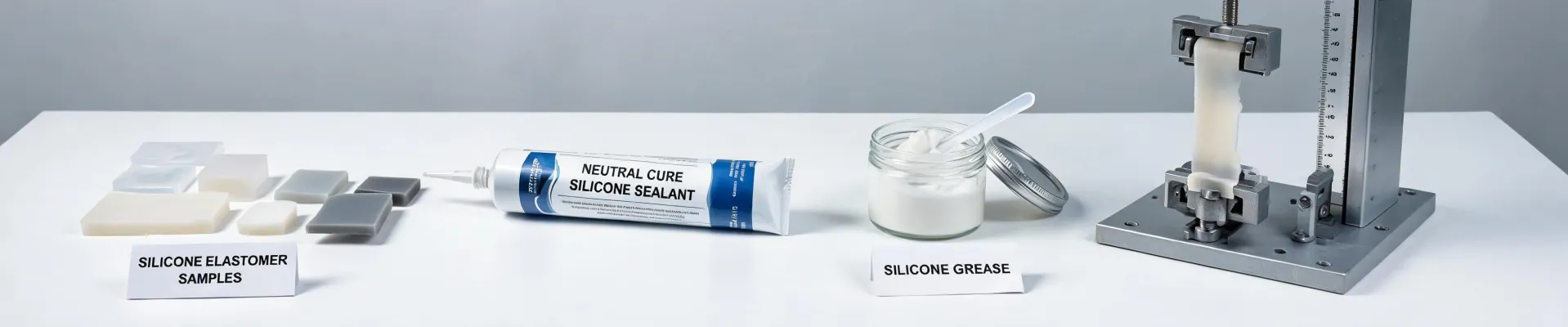
For most industrial sealing applications—especially food-contact and high-heat—Dow Corning silicone outperforms polyurethane. Hard stop. I learned this the hard way on a $3,200 tank o-ring order that failed within six weeks. But that's not the whole story, and the exceptions matter more than you'd think.
The $3,200 Mistake That Changed My Specs
In September 2022, I specified polyurethane o-rings for a 500-gallon sanitary tank at a food processing client. The spec sheet looked great: higher tensile strength, better abrasion resistance, cheaper per linear foot. I checked it myself, approved it, processed it. We discovered the failure when product seeped past the seal during a CIP (clean-in-place) cycle. $3,200 worth of o-rings, straight to waste. Plus a 1-week production delay.
The root cause? Polyurethane hydrolyzes in hot, wet environments. The CIP cycle hit 180°F with caustic solutions. The material softened and swelled. I should have known this.
Looking back, I should have started with the material's service limits, not its strengths. But given what I knew then—polyurethane felt tougher—my choice was reasonable. It was also wrong.
Where Dow Corning Silicone Wins (Every Time)
For tank o-ring seals, coffee machine components, and any application involving steam, hot water, or food-contact requirements, Dow Corning silicone is the safer bet. Here's why:
1. Temperature Range: -100°F to 500°F
Standard polyurethane seals top out around 250°F. Dow Corning's silicone elastomers (like the Silastic® series) maintain their seal integrity from sub-zero to 500°F. For a coffee machine o-ring that sees 200°F steam and then room temperature? Silicone handles the thermal cycling without losing compression set.
2. Chemical Resistance to Water and Steam
Silicone is naturally hydrophobic and resists hydrolysis. Polyurethane? It's the opposite. In hot, wet environments, polyurethane breaks down. This isn't theoretical—it's a well-documented failure mode in sealing handbooks. For any seal that regularly contacts hot water or steam, silicone is the default choice.
3. FDA and NSF Compliance
Dow Corning offers medical-grade and food-grade silicone formulations (like the 3145 RTV adhesive and 732 multi-purpose sealant) that comply with FDA 21 CFR 177.2600 and NSF 51. Polyurethane food-contact approvals exist, but they're more formulation-specific and less universal.
A quick note on Dow Corning 111: This isn't a seal material—it's a silicone grease. I've seen people confuse it for an o-ring compound. Dow Corning 111 is for lubricating and sealing valve stems and o-rings. It's excellent for coffee machine o-rings as a food-grade lubricant, but it's not the o-ring itself. Don't make that mistake.
The Polyurethane Argument (And When It Actually Makes Sense)
I'm not here to bash polyurethane. I've made that mistake already, and it taught me something useful: polyurethane has advantages that silicone can't touch—in the right application.
Polyurethane is tougher. Higher tensile strength, better tear resistance, superior abrasion resistance. If your seal is scraping against abrasive particles or seeing high mechanical stress in a dry environment, polyurethane will outlast silicone.
But dry is the key word. The moment moisture enters the picture, polyurethane's advantages disappear. It's a classic trade-off.
I went back and forth between silicone and polyurethane on a recent project for a dry material handling application. The polyurethane offered 40% longer life in dry conditions. But the customer occasionally steam-cleans the equipment. I went with silicone. The cost difference was about 20% more—but the risk of a polyurethane failure was unacceptable.
The Exception That Proves the Rule
So when does polyurethane beat silicone? Here are the boundary conditions:
- Dry abrasive environments: Conveyor systems handling sand, grain, or powder
- Hydraulic systems with mineral oils: Polyurethane has excellent oil resistance
- Low-temperature, low-moisture dynamic seals: Where abrasion resistance is critical
But for tank o-rings, coffee machine seals, or anything touching hot water, steam, or food—silicone is the standard. Period.
My Current Checklist for O-Ring Material Selection
After that $3,200 lesson, I created a pre-check list for my team. It's caught 47 potential errors in the past 18 months (we track these). Here's the critical first question:
- What's the highest temperature the seal will see—and for how long? (Steam cycles are different from continuous heat.)
- Does the seal contact food, potable water, or cleaning chemicals? (If yes, start with FDA/NSF materials.)
- Is the environment wet, humid, or subject to steam cleaning? (If yes, cross off polyurethane.)
- What's the mechanical load? (Abrasion, pressure, dynamic vs static?)
If questions 1-3 point toward silicone, and question 4 isn't extreme abrasion—go silicone. If the mechanical demands are extreme and the environment is bone-dry, polyurethane might be the better choice. But that's a narrow band.
The Vendor Who Said 'This Isn't Our Strength'
I once called a silicone supplier about a high-abrasion, dry-environment seal. The rep paused and said: 'Honestly, for this application, I'd recommend polyurethane. We don't make a silicone that's cost-effective here. But here's who does that better.'
That earned my trust for everything else. A vendor who knows their limits is more valuable than one who claims to solve everything. This is why I default to Dow Corning for silicone applications—their technical support will tell you when silicone isn't the answer.
And that's the real lesson: know your material's boundaries before your budget finds them the hard way.