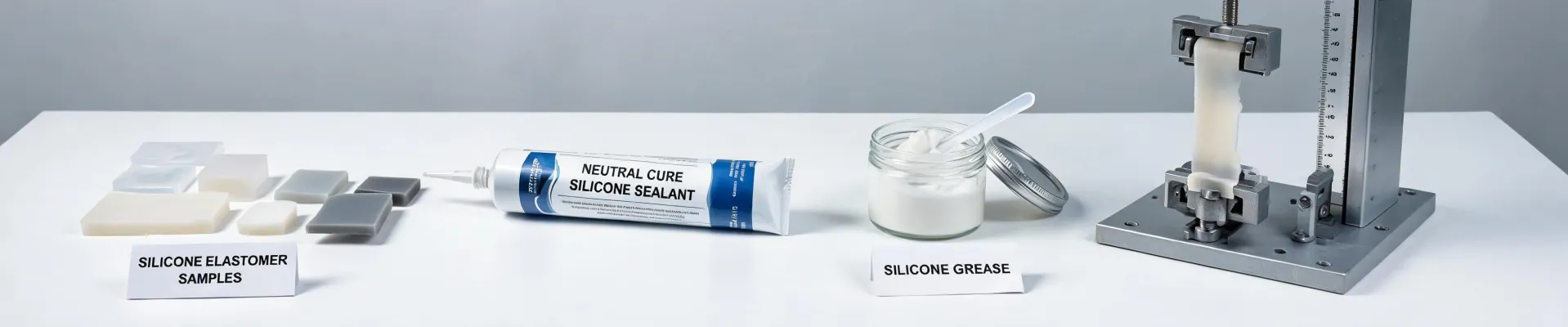
I Assumed 'Silicone' was Simple. I Was Wrong.
When I first started handling materials procurement for a mid-size parts manufacturer back in 2017, I treated silicone like it was one thing. You needed a rubber-like part? You specified 'silicone,' and you got a part. Worked fine for the first few projects.
Then came the order that changed my entire approach—a run of 1,200 molded seals meant for a high-temperature application. I'd spec'd 'Dow Corning Silicone' on the drawing and moved on. The parts looked perfect. They felt right. But in the field? They failed. Every single one. That $3,200 order went straight to scrap, plus a week of production downtime for our client.
That's when I realized: Dow Corning (now Dow) manufactures hundreds of silicone compounds, and they're not interchangeable. That failure was on me.
The Real Problem: 'Silicone' Is a Category, Not a Specification
Most people who come to me—and I've trained about a dozen procurement folks since then—assume that if a material is called 'silicone,' it shares roughly the same properties. The assumption is that variations are minor details, not fundamental differences in performance.
The reality is more complicated. A Dow Corning silicone compound designated for compression molding behaves completely differently from a liquid silicone rubber (LSR) used for injection molding. And within those categories, you've got durometers, temperature ranges, and chemical resistance profiles that vary wildly.
Take Dow Corning Silicone Black as an example. It's a common spec because black silicone looks professional and hides handling marks. But 'black' isn't a material property—it's a colorant. The base compound underneath that pigment determines whether the part can handle 200°F or 500°F, whether it's FDA-grade, or whether it'll degrade in contact with certain oils.
I see this mistake constantly: someone writes 'Dow Corning Silicone, Black' on a BOM without referencing the specific compound number. Then they wonder why the part fails when the environment doesn't match the generic assumption.
The Cost of Getting It Wrong (I've Got the Receipts)
Let me be concrete about what these mistakes cost. And no, I'm not just talking about the part price.
- That first seal failure: $3,200 in parts lost. But the real cost was the 1-week production delay for our client. If I remember correctly, the total claim was around $8,500 after lost labor and expedited replacement shipping.
- A 2022 mixing error: We ordered 500 units of a Dow Corning compound for a tool handle application. The vendor used the wrong durometer. Parts came back too hard. We didn't catch it until assembly—$450 worth of scrap plus rework time.
- Q1 2024 glove fiasco: I approved a switch from butyl rubber gloves to nitrile for a chemical handling task (thinking 'nitrile is better, right?'). Wrong compound. A $600 order of gloves that couldn't resist the solvent exposure. We caught it before anyone got hurt, but that was embarrassing.
After the third rejection in Q1 2024, I created a pre-check list that now sits on every new material request. We've caught 47 potential errors using it in the past 18 months.
Why People Keep Making This Mistake (Myself Included)
The thing is, the problem isn't laziness. It's an industry knowledge gap that's gotten worse as the materials have gotten more specialized.
Ten years ago, if you ordered 'silicone rubber,' you got a limited range of options. The differences were manageable. Today, Dow alone produces hundreds of compounds. A Dow Corning silicone compound designed for high-tear-strength applications is a different product from one optimized for thermal conductivity. And neither one is right for a simple gasket application if you haven't checked the data sheet.
People think that paying more for a premium material like Dow Corning guarantees quality. Actually, the relationship is: paying for the right material prevents failure. The cost of the material is secondary to whether it's the correct spec for the job.
I should add that this applies just as much to molded nitrile rubber as it does to silicone. Nitrile is a workhorse material—great for oil resistance, sealing, and gaskets. But you can't just say 'nitrile' and expect it to handle every hydrocarbon environment. The acrylonitrile content matters. The durometer matters. Whether it's a 70 Shore A or a 90 Shore A compound can be the difference between a seal that lasts five years and one that leaks in six months.
The same logic applies to things like spoonula silicone—those flexible, heat-resistant spatula-like tools used in labs and kitchens. They're made from a specific grade of silicone that's food-safe and heat-stable. But if you try to use a standard industrial silicone for that application? You risk off-gassing or chemical leaching. (I had a chemistry lab manager explain this to me after I questioned why their specs were so specific—lesson learned.)
What I Do Now (And What You Should Do Instead)
I'm not going to give you a 10-step workflow here, because the problem isn't complexity—it's attention to the wrong details. Here's what changed for me:
First, I stopped specifying materials by brand name and color. 'Dow Corning Silicone Black' became 'Dow Corning Silicone Compound XYZ, Color Black'—with the compound number pulled directly from the manufacturer's data sheet.
Second, I built a simple comparison chart for the materials we use most often. It doesn't cover everything, but it covers the decisions that came back to bite us. For example, in the butyl rubber gloves vs nitrile decision, I now have a one-page reference: butyl is better for ketones and esters; nitrile is better for oils and grease. The right choice depends on the specific chemical, not a general preference.
Third, I ask one question that I never used to: 'What happens if this material fails?' If the answer involves safety, production downtime, or significant rework, I double-check the spec with the manufacturer directly. (We've started calling Dow's technical support line for silicone compound questions—it's saved us at least twice now.)
The truth is, most material failures are preventable. They're not caused by bad manufacturing—they're caused by bad specification. And that's fixable.
“The cheapest material that works is almost always cheaper than the most expensive material that doesn't.” — Something I wish someone had told me in 2017.
If you're reading this because you've had a material failure recently, I'd bet it's not a quality issue—it's a spec issue. Your first step should be to check what compound number was actually ordered. If the answer is just 'silicone' or 'nitrile,' you may have found your problem.