If You're Stocking a Maintenance Closet, This Decision Keeps Coming Up
If you've ever managed the supply order for a plant or a maintenance team, you know the moment. You're staring at the catalog (or the online cart), and you've got two Dow Corning products side by side. One is a grease. One is a sealant. Both are silicone. And you're thinking: Can't I just use one for everything?
I've been the person making that call for about five years now. I process 60-80 orders annually for our maintenance department—everything from O-rings to foam board insulation. And I've learned the hard way that choosing between Dow Corning silicone grease and silicone sealant isn't a 'pick one' decision. It's a 'pick the right one for the right job' decision. And getting it wrong costs time, money, and sometimes a phone call to a supplier who can't help you until Monday.
Here's what I've figured out. I work in a mid-sized industrial facility (about 200 employees, 3 shifts), and I report to both operations and finance. So I see the cost side and the 'did it work?' side. This comparison is based on what I've actually seen work—and fail—in our building.
What We're Actually Comparing: The Core Function
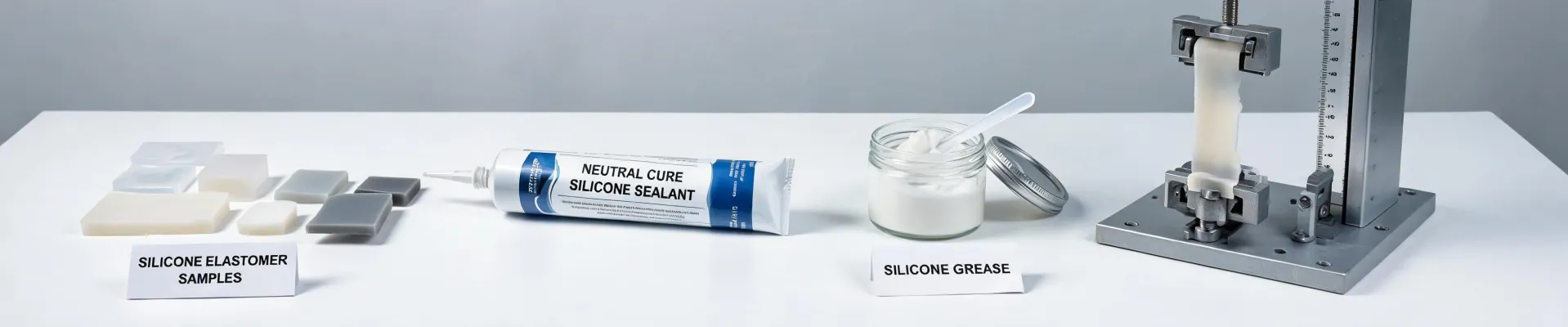
Let's start with the basics. Dow Corning silicone grease and Dow Corning silicone sealants both use silicone polymers. That's where the similarity ends. The difference is fundamental:
- Dow Corning Silicone Grease (like the Molykote or 111 compounds): Stays soft. Remains a semi-solid. It's a lubricant and a protectant. It doesn't cure.
- Dow Corning Silicone Sealant (like the 732, 795, or 3145 RTV): Cures into a solid rubber. It creates a bond and a barrier. It is not a lubricant.
One of my early mistakes was using a thin layer of sealant (I thought it would 'seal and lubricate' a valve stem). It cured. The valve stuck. I spent a Saturday taking it apart. Grease would have been the right call.
The bottom line on the core function: Grease is for moving parts. Sealant is for sealing gaps.
Dimension 1: Application Method & Mess Factor
This is where the rubber meets the road (literally).
Grease: Messy but Forgiving
Dow Corning silicone grease is a paste. You apply it with a brush, your finger, or a grease gun. It's messy. It gets everywhere. But here's the upside: if you put too much on, you wipe it off. If you miss a spot, you add more. There's no clock ticking. I've had a batch of grease on a valve thread sitting for three days before it got assembled, and it was fine.
"The first time I ordered grease, I didn't realize it didn't cure. I applied it to a gasket and waited an hour for it to 'set.' It didn't. That was embarrassing."
Sealant: Clean but Time-Sensitive
Dow Corning silicone sealant comes in a tube or cartridge. It's a paste that cures (usually from the outside in) when exposed to air. You apply it, tool the bead, and then you have a limited window—typically 5 to 15 minutes—before it skins over. Once it cures, it's solid. There's no 'oops, let me redo that' after an hour.
For building applications, especially sealing panel joints or glass, this is perfect. For a quick fix on a moving part? It's a trap. I've seen a mechanic seal a leaking pipe fitting with 732, then wonder why the joint was impossible to disassemble later.
Verdict on Dimension 1: Grease wins for forgiveness. Sealant wins for a clean, permanent finish. If you hate wasted time, and your team isn't known for reading instructions, go with grease for most maintenance tasks. Honestly, I'm somewhat biased here because our team has a habit of applying sealant too thick.
Dimension 2: Temperature & Thermal Performance
Both Dow Corning silicones handle temperature well. But they handle it differently.
Grease: Broad Range, Continuous Performance
A good Dow Corning silicone grease (like the Molykote 111 or the 340 heat sink compound) can handle from -40°F all the way up to 400°F or more. It stays functional across that whole range because it doesn't cure or harden. It's a liquid-like solid at room temperature and a less-viscous liquid at high temp. But it still works.
For heat sink applications (like on a power supply or a motor controller), the 340 compound is a game-changer. You can't use a sealant there. The sealant would insulate, not conduct heat. I learned that one when our electrician asked for 'that white goo' for a new motor. He got the grease. It worked.
Sealant: High Temp, But Once
Dow Corning silicone sealants (like 732 or 3145) also have good temperature resistance, often up to 400°F or more depending on the formulation. But they cure once. If they fail at high temperature, they fail as a solid. You don't get a warning leak (like you might with grease slowly thinning out). You get a crack, and then a sudden failure.
For sealing oven doors, furnace panels, or exhaust ducting? Sealant is often the right choice. For a bearing housing that gets hot? Stick with grease.
Verdict on Dimension 2: Grease for moving parts that get hot. Sealant for sealing static gaps that get hot. This one surprised me when I first started—I assumed sealant was 'stronger' at high temps. Not always.
Dimension 3: Chemical Resistance & Leak Prevention
This is the dimension where I've made the most costly mistakes. Probably the biggest cost me about $2,400 in rejected expenses when I ordered the wrong thing for a hydraulic line repair.
Grease: Good Against (Some) Chemicals, Not a Barrier
Dow Corning silicone grease is excellent against water and many non-polar chemicals. But it's not a barrier to flow. A grease-packed seal is a viscous plug, not a solid seal. If the pressure is high enough, the grease will be pushed out. I've seen it happen on a high-pressure water line. The grease held for about two weeks, then started weeping.
Sealant: True Chemical Barrier, But Selection Matters
A properly cured Dow Corning silicone sealant forms a solid rubber gasket in place. It's a true barrier. But—and this is a big but—not all sealants resist all chemicals. One of our maintenance guys used a general-purpose 732 on a fuel line fitting. It swelled and failed in about a month. We had to use a specialty sealant designed for fuel resistance (Dow Corning has several).
Here's the key: If you need to stop a leak, you need sealant. If you need to prevent a leak in a moving part, you need grease. They are not interchangeable for this.
Verdict on Dimension 3: Sealant wins for stopping leaks. Grease wins for preventing them in moving parts. But you must check the chemical compatibility chart. Honestly, I'm not sure why some sealants are incompatible with common fluids—I suspect it's a complex polymer chemistry that's way above my pay grade. If someone has insight, I'd love to hear it.
When You Should Pick Grease vs. When You Should Pick Sealant
After making a lot of mistakes (and keeping a detailed spreadsheet of the outcomes), here's my practical guide:
Pick Dow Corning Silicone Grease When:
- You need to lubricate: This is obvious.
- You need to protect: E.g., coating terminals or battery posts.
- You need to seal a moving component: Valve stems, pump shafts, O-rings (which leads me to our rubber beads and O-ring catalogs—grease is the standard assembly lubricant).
- You need thermal conductivity: Heat sink compound is a grease.
- You are unsure about the assembly/disassembly cycle: Grease is easy to remove.
Pick Dow Corning Silicone Sealant When:
- You need to bond or adhere: E.g., sealing a glass window to a frame.
- You need a permanent, solid gasket: Engine covers, flange seals.
- You need to fill a gap: Like sealing around a pipe penetration in a foam board insulation panel (and yes, foam board can get wet if it's not sealed, but the sealant is what stops the water).
- You need a long-term, non-moving seal: Building joints, sanitary seals in food processing areas.
My personal rule of thumb: If you can't decide, ask yourself 'will this need to come apart in the next year?' If yes, buy grease. If no, and it just needs to be sealed, buy sealant. My experience is based on about 200 mid-range industrial orders. If you're working with food processing or medical device applications, your experience might differ significantly—especially with the medical dispersions Dow Corning makes.
And if you're looking for the Dow Corning silicone grease that can do everything? I don't think it exists. The 111 grease is my go-to for most things, but for heat transfer, you need the 340 compound. Similarly, for sealants, the 732 is a workhorse, but the 795 is better for structural glazing.
Bottom line: Don't try to make one product do both jobs. You'll end up with a sticky mess or a leak that costs you your weekend. I've been there. Trust me on this one.