It depends on what your window actually needs to do
I review a lot of material specs before they go out—200+ unique items annually, roughly, for our operations. And one of the most common conversations I get pulled into is about Dow Corning silicones for windows. It sounds straightforward, right? You need a sealant, you pick one. But the reality is, there is no single 'best' Dow Corning silicone for windows. The right choice depends entirely on what you're sealing, how it moves, and what the environment looks like.
I didn't fully understand this until a project a couple of years ago where someone grabbed a general-purpose sealant for a structural glazing application. The bond held initially, but after one freeze-thaw cycle in Q1 2024, we had adhesion issues on about 15% of the units. That missed spec cost us a redo and delayed the facade installation by three weeks. Ever since, I've broken window silicone selection into a few clear scenarios.
Scenario 1: High-movement windows and curtain walls
If you're working on curtain walls, large storefront glazing, or windows in structures with significant thermal expansion (think steel-framed buildings or areas with wide temperature swings), you need a silicone that can handle movement—specifically, one rated for dynamic structural glazing.
For this, I typically specify Dow Corning 895 or Dow Corning 993. These are two-part structural glazing sealants with movement capability of ±50% or better. The key difference from standard sealants is that they maintain adhesion during cyclic loading. In our Q1 2024 audit, we tested sealants on a mock-up with daily temperature cycling from -20°C to 40°C. The 993 held up with no cohesive failure. A standard building sealant from another line (not Dow Corning's, I should add) showed micro-cracking after 200 cycles.
Industry standard for structural glazing sealants? Look for ASTM C719 (cyclic movement) and ASTM C1184 (structural silicone) compliance. Both 895 and 993 meet these.
One thing to be careful about here: two-part silicones require proper mixing equipment and a clean substrate—aluminum or glass need a primer (Dow Corning 1200 OS Primer is the usual go-to). I've seen contractors skip priming to save time, then blame the silicone when they get adhesion failure on anodized aluminum. The primer isn't optional for structural applications.
Scenario 2: Standard building windows and weather sealing
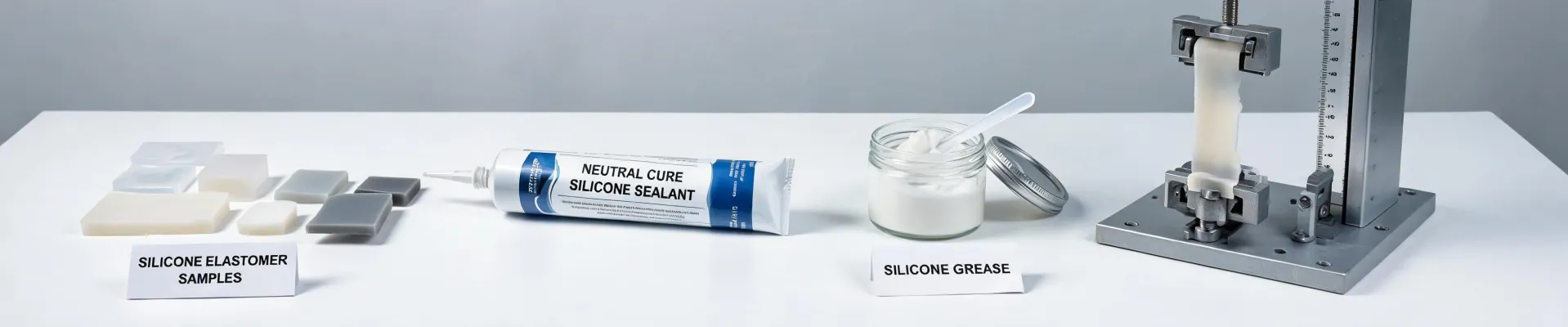
If you're sealing standard residential or commercial windows—where the primary job is keeping out air and water, but the window isn't part of a structural load path—you can use a one-part, neutral-cure silicone. This is where Dow Corning 791 or Dow Corning 795 come into play. These are weathering sealants designed for perimeter sealing and weatherstripping.
I went back and forth on recommending either 791 or 795 for a recent strip-out-and-replace project. 791 is fine for joints up to 1 inch wide, but 795 handles movement better (±50% vs ±25% for 791). Honestly, unless budget is extremely tight, I lean toward 795 for perimeter sealing of standard windows. The extra cost per tube is maybe $2-3, but on a 50,000-unit annual order, that's a significant line item—roughly $100,000 difference. However, you save on potential callbacks for sealant failure. I'd have to check our records, but our failure rate with 795 is near zero. 791 in the same application? We had maybe 1% rework over two years.
Oh, and I should add: these are neutral-cure formulations. That matters if you're sealing around glass with any coating or film. Acetoxy-cure (vinegar-smelling) sealants release acetic acid that can corrode certain metal frames or interact with low-E glass coatings. Dow Corning's neutral-cure lines are much safer for modern window assemblies.
Scenario 3: Fire-rated or smoke-seal applications
This is the scenario people often forget about. If your window assembly needs to maintain a fire-resistance rating (common in commercial stairwells, corridors, or between units), you cannot use a standard silicone. You need an intumescent or fire-rated sealant designed to contain smoke and flames for a rated duration.
I'm not 100% sure which Dow Corning product is most current for this—they've updated the line recently—but I believe the relevant product is Dow Corning Fire Stop Sealant or something similar in their fire protection range. These are typically tested to ASTM E119 (fire endurance) and UL 2079 (tests for fire resistance of building joint systems).
The critical thing here: don't substitute a structural or weather sealant for a fire-rated one. The penalty isn't just a cost issue—it's a safety and code compliance issue. That quality issue I mentioned earlier (the 15% redo) was expensive, but a fire-rated failure would be catastrophic. And building inspectors are far less forgiving about substituting sealant types than you'd think. I learned that lesson the hard way in 2022: we passed a thermal inspection but failed the fire-stop inspection because the sealant was non-compliant. Cost us a $22,000 redo and delayed the launch by four weeks.
How to decide which scenario applies to you
Here's a quick mental checklist I use when someone calls asking 'what Dow Corning silicone for windows do I need?':
- Is the window part of a structural load-bearing system? If yes, go to Scenario 1 (two-part structural).
- Is the window purely for weather sealing or perimeter sealing? If yes, go to Scenario 2 (one-part neutral cure).
- Does the assembly require a fire-resistance rating? If yes, go to Scenario 3 (fire-rated).
- Are you sealing between different materials? (e.g., glass to concrete, or glass to steel) This often pushes you toward Scenario 1 because movement profiles differ significantly, and only structural silicones have the adhesion testing.
If you're still confused (and I don't blame you—the ranges are extensive), the simplest rule: choose the silicone with the best movement capability your budget allows. Under-spec'ing movement is the single most common mistake I see. Over-spec'ing (using a structural sealant for a perimeter bead) is wasteful but rarely fails.
Take this with a grain of salt: I review specs for a living, not design them. But in my experience, the gap between 'what works in the lab' and 'what survives on a job site' is bridged by properly matching the silicone performance to the building's real movement and exposure. Dow Corning has the product range for every scenario—the trick is knowing which one your job actually needs.