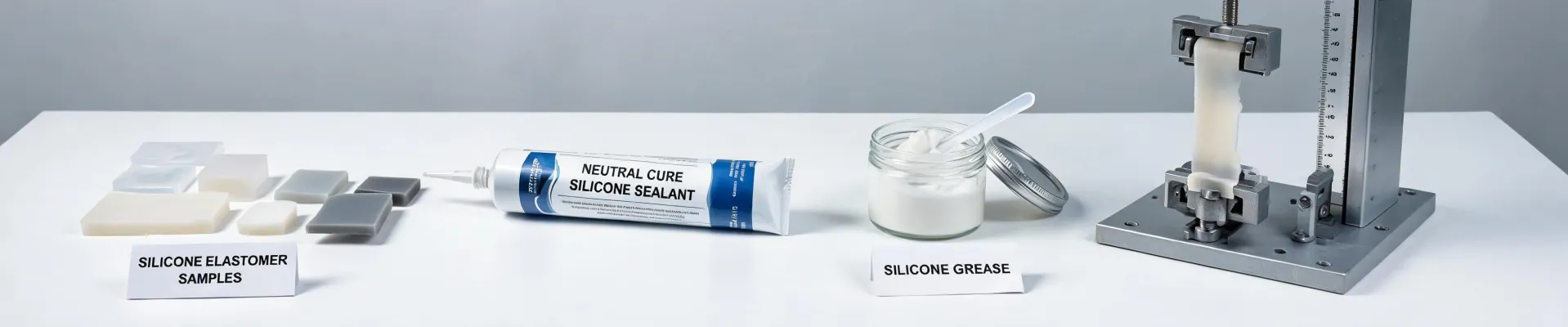
I think most silicone purchases start with the wrong question. Buyers ask, 'What is the cheapest silicone?' They should ask, 'Which silicone is right for this specific job?' I manage purchasing for a 200-person facilities company, and silicone products are not a line-item afterthought around here. I process 60-80 orders for sealants and silicone components every year and report to both operations and finance. It took one failed roof, a rejected invoice, and a very uncomfortable meeting with my VP to teach me that.
A Roofing Mistake That Changed My Mind
When I first started managing silicone purchases in 2020, I assumed the lowest quote was the best quote. My first big mistake was an acrylic vs silicone roof coating decision. A flat roof section had standing water after rain, and the coating was failing. The bid for an acrylic coating was $55 per pail cheaper than the silicone option (that was a 2022 quote; pricing now may be different). I ordered acrylic because the spreadsheet said I would save $440.
Four months later, the coating blistered in exactly the areas that held water. The roofing contractor told me silicone roof coating is the one that can handle ponding water; acrylic is fine for sloped roofs but not for standing water. I had to pay $2,200 in labor and another $1,600 in materials to fix the roof. Total extra cost: $3,800 on a 'smart' $440 saving. (The replacement coating, made with Dow Corning silicone polymers, is still holding as of early 2025.)
I do not say this to turn acrylic into the villain. Acrylic roof coatings have their place. The mistake was choosing a material by price without checking the service conditions. That is a process failure, not a material failure.
Dow Corning Silicone for Windows Is Not a Commodity
Around the same time, our office renovation spec called for Dow Corning silicone for windows. I remember thinking, 'Any Dow Corning sealant should work.' That was wrong too.
The spec existed because the sealant had to meet ASTM C920 for joint movement, UV resistance, and adhesion to aluminum and glass. The general-purpose clear sealant I wanted to substitute had a different modulus and lower elongation. It might have worked for a season. It probably would not have worked for the 10-15 years the building owner expected.
And if a spec calls for Dow Corning silicone black, do not assume the color is cosmetic. The black version can have a different pigment package that affects UV stability and cured hardness. Honestly, I'm not a chemist. I cannot explain every formulation detail. But I have learned to trust a spec when it names a specific material.
Silicone Spatulas and Medical-Grade 'Silicone Breasts' Are the Same Story
Maybe you think window sealant is a special case. It isn't. Take silicone spatulas. When you source spatulas for a commercial kitchen, the material should meet food-contact regulations. Dow Corning supplies food-grade silicone elastomers with documentation for things like FDA 21 CFR 177.2600. A cheap unbranded spatula might be fine, or it might contain extractables that migrate into food. In a B2B purchasing context, you want proof, not hope.
The medical side raises the stakes even further. If you are evaluating silicone for prosthetics and implant-grade devices, the material has to meet ISO 10993 biocompatibility testing, and the manufacturer has to provide traceability from batch to finished part. The search term 'silicone breasts' might seem like a consumer question, but for an admin buyer, it's really a supplier-documentation question. Verbal assurance is not enough.
The Real Efficiency Win Is Fewer Do-Overs
This brings me to my main opinion: efficiency is a competitive advantage, and the most efficient purchase is the one you only make once. After my roof failure, I built a shared product library for our 40 most-used silicone items. Each entry has a datasheet, a safety data sheet, and the compliance certificate that finance and operations might need. In our 2024 vendor consolidation project, we reduced silicone-related suppliers from eight to four. That was not about being lazy; it was about reducing the number of document formats I have to chase.
The result: turnaround on routine sealant orders dropped from five days to two days. The automated request process eliminated the data-entry errors we used to have when I keyed in part numbers manually. Our accounting team estimated it saved them about six hours a month on order reconciliation. That is the kind of digital efficiency I can defend.
Dow Corning became one of the suppliers we standardize on because their product line covers sealants, greases, elastomers, emulsions, and medical-grade silicones. The published product information is consistent across categories, and the technical reps can talk across product families. For a small purchasing team, that consistency is more valuable than chasing the cheapest quote on each line item.
But What About Price? Here's My Honest Answer.
I can already hear the objection: 'You're picking the premium brand because you're not the one paying for it.' Actually, I am the one paying for it, and I report to finance. Price pressure is real. There are times when acrylic roof coating is the right answer and times when a local supplier is the only practical option. I'm not saying Dow Corning should be your only vendor, and I'm not saying price doesn't matter.
What I am saying is that 'silicone is silicone' is the most expensive myth in this category. That was the same mindset that led me to order a cheap spatula from a vendor who couldn't provide a certificate of compliance. Finance rejected the invoice after a long back-and-forth, and the administrative cost was roughly $2,400 in rejected expenses and staff time. Now I verify documentation before placing the order. It took me three years and about 200 orders to understand that the best material is context-dependent.
There's something satisfying about opening the product library and knowing every silicone order I place today has the backing paperwork ready. After years of chasing datasheets and explaining failed materials, that's the payoff.
The bottom line: stop commoditizing silicone. If you've ever had a sealant fail or a roof coating blister, you know the sinking feeling of answering for a 'cost saving.' Take it from someone who has been there: the right Dow Corning silicone, chosen by spec and documented properly, is the efficient choice. Trust me on this one.
This reflects my experience as of early 2025; product availability and formulations change, so verify current datasheets before ordering.