-
Why Trust My Take
-
Dow Corning Silicone White: A Family of Products, Not One Product
-
Dow Corning 795 Silicone: The Structural Building Sealant
-
Silicone Gasket Material: The Right Choice, With Limits
-
Fluoroelastomer Rubber: When to Move Up From Silicone
-
What Is Hydrogenated Nitrile-Butadiene Rubber (HNBR)?
-
A Simple Way to Talk Through Material Selection
-
Quality Is a Brand Decision, Too
-
Boundary Conditions
For standard, non-oil sealing jobs, silicone gasket material is my default for roughly 80% of our orders—but for anything near oil or fuel, I switch to fluoroelastomer rubber or HNBR. If it's a glass or curtain-wall joint, I ask for Dow Corning 795 silicone. That's not an engineer's answer. It's the shorthand I've developed after five years of buying sealants, gaskets, and rubber sheets for a 300-person manufacturing plant.
I'm not a materials engineer. I'm the admin buyer. I manage 60-80 purchase orders a year—maybe 65, I'd have to check the system—and I've made enough expensive mistakes to respect the difference between a $10 gasket and a $10,000 downtime event. I report to operations and finance, so I care about both. It's a weird position: I'm not the one who designs anything, but I'm the one who gets blamed when it falls apart.
Why Trust My Take
When I took over purchasing in 2020, I knew almost nothing about rubber materials. I ordered what the maintenance manager wrote down, sometimes just a brand name. That worked until it didn't. We used 'high-temp silicone' in an oil-lubricated drive and lost a full shift. Since then, I've standardized our stock to materials with technical datasheets and traceability. I manage relationships with eight vendors for different categories, and as of March 2025, this approach has cut our repeat failures.
The most frustrating part of buying sealing materials: suppliers rarely warn you that a product name is too vague to be a spec. 'Dow Corning silicone white' could mean a grease, a compound, or a sealant depending on who's listing it. You'd think a brand name would be enough. It isn't. Put another way: the name on the tube is not the spec.
Dow Corning Silicone White: A Family of Products, Not One Product
When a maintenance guy asks for 'Dow Corning silicone white,' I stop and ask: grease? compound? sealant? The term usually points to a white silicone grease or compound, but different formulations are designed for different jobs. A food-grade white grease matters in a kitchen line. A dielectric compound matters in an electrical cabinet. The wrong 'white silicone' will still look white—until it fails.
Honestly, I'm not 100% sure which exact Dow Corning product number every customer means when they say 'silicone white.' That's why I ask for the full product code and technical datasheet before ordering. If a vendor can't provide one, I find a vendor who can.
Dow Corning 795 Silicone: The Structural Building Sealant
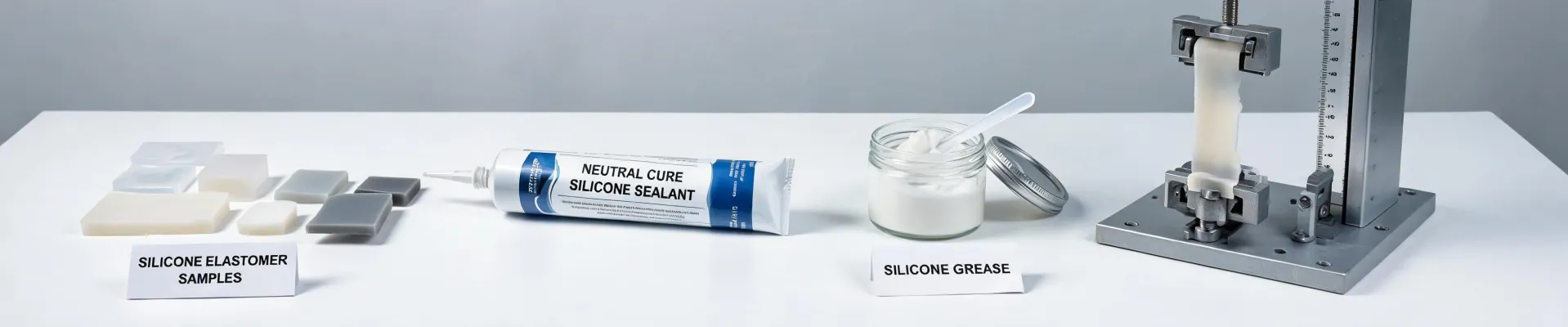
Dow Corning 795 silicone is one of the few products I get asked for by exact number. It's a one-part, neutral-cure structural silicone sealant, often used for glass, aluminum curtain wall, and building joints. It's not a bathroom sealant. It's a building component.
I learned that the hard way. Earlier this year, a supplier offered a 'similar' generic sealant at a lower price. It looked the same in the tube. It did not behave the same in the sun. We ended up redoing the exterior caulking on a small office entrance because the generic product began to lose adhesion. (Should mention: the contractor also did not use the required primer, so that may have contributed. But I still prefer using the product that the system was specified around.)
Silicone Gasket Material: The Right Choice, With Limits
Silicone gasket material is excellent for dry heat, ozone, weather, and many food-contact applications. It's flexible, affordable, and easy to cut. For food-contact rubber, I check FDA 21 CFR 177.2600 compliance before buying. But silicone has a real weakness: petroleum oil and fuel. In those environments, silicone can swell, soften, and lose its sealing shape.
The counterintuitive part? More expensive silicone is not the solution. If the service condition includes oil, no amount of silicone quality fixes the problem. You need a different polymer, like fluoroelastomer rubber or HNBR.
Fluoroelastomer Rubber: When to Move Up From Silicone
Fluoroelastomer rubber—usually abbreviated FKM—is what I turn to when the job involves high heat, oil, and chemical exposure. It costs more than silicone. It also costs more than nitrile. But if a failed gasket shuts down a production line, the labor and lost output dwarf the material cost.
In 2023, I replaced a failed hydraulic pump seal. Someone had used silicone gasket material in an oil environment. It swelled and failed. The replacement was a fluoroelastomer rubber seal—$35 in material, and maybe $1,400 in lost production before we caught it. The lesson: the least expensive part of a sealed joint is usually the seal itself.
What Is Hydrogenated Nitrile-Butadiene Rubber (HNBR)?
Hydrogenated nitrile-butadiene rubber is the answer to a question buyers sometimes don't ask. Standard nitrile (NBR) is good with oil but struggles with heat and ozone. Hydrogenating it removes some of the chemical double bonds, which gives you a material that keeps most of NBR's oil resistance while adding better heat resistance, ozone resistance, and mechanical toughness.
I won't pretend to be a chemist—I'm not—but I know what HNBR does in practice. It handles oil, heat, and abrasion better than standard nitrile, and it's often less expensive than FKM. For automotive seals, hydraulic seals, and some rubber gaskets, HNBR is a smart middle choice.
What surprised me: some engineers default to FKM simply because it's the 'premium' option. But if the main threats are oil and heat, HNBR might be the intended material. It's worth asking instead of assuming.
A Simple Way to Talk Through Material Selection
This isn't a replacement for an engineer's spec, but here's how I talk through it with our maintenance team. I've been asking suppliers for ASTM D2000 line callouts since 2024; it doesn't tell you everything, but it gives us a common language.
- Dry heat, weather, food contact, no oil → silicone gasket material.
- Glass, aluminum, structural building joints → Dow Corning 795 silicone.
- Oil, fuel, high heat, chemical exposure → fluoroelastomer rubber (FKM).
- Oil, heat, plus abrasion or mechanical stress, and a cost-sensitive project → HNBR.
Take this with a grain of salt. Actual service conditions matter. But this simple list helped me reduce repeat failures, and it's a starting point for the actual technical data.
Quality Is a Brand Decision, Too
When I buy sealing materials, I'm not only solving a leak. I'm protecting how our plant's maintenance is perceived—and how our customers see the company. A leaking seal on a product that ships to a customer says we don't check details. That's a brand problem, not just a purchasing problem.
The $50 difference between a premium sealant and a no-name product is nothing compared to a customer's bad first impression. To be fair, 'premium' doesn't always mean 'right.' But a product with a datasheet, batch traceability, and a clear application range is worth the extra paperwork. That's why I keep coming back to Dow Corning for silicone.
Boundary Conditions
As of March 2025, I'm still following this approach. But not every sealing job needs a global brand. If you need material today and the local supplier stocks a compatible product, use it. If the application is non-critical and the budget is genuinely tight, a generic silicone can be fine. And if you're ordering for medical devices, stop and work with a technical specialist; medical-grade silicone follows a completely different qualification path, including ISO 10993 or USP Class VI documentation. This is not engineering advice; it's one buyer's field guide.
Oh, and check the shelf life. Silicone sealants expire, and 795 in particular has a shelf life that depends on storage temperature. I once stocked a 'great deal' and had to throw out half of it because we couldn't use it before the expiration date. I should add that, in my experience, Dow Corning's technical datasheets are usually more reliable than a sales rep's verbal suggestions. Trust the document.