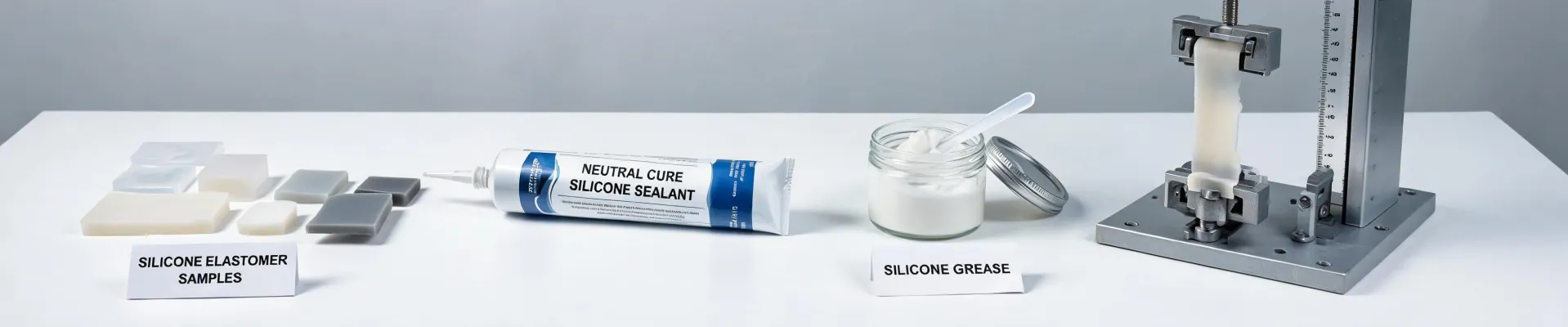
If you're choosing between silicone and rubber o-rings for your next project, here's the short answer: silicone is usually the cheaper option in the long run. Not on unit price—it's typically 30–50% more expensive upfront—but when you factor in total cost of ownership (TCO), silicone wins on durability, temperature range, and reduced maintenance. I've managed procurement for industrial sealing components for 6 years, tracking over $180K in annual spending, and I've run the numbers both ways. Trust me on this one.
I'm a cost controller by instinct. My job is to find the real cost, not the sticker price. And over the years, I've learned that the “cheap” rubber o-ring you buy today can cost you way more tomorrow. Let me show you how I arrived at that conclusion, and why Dow Corning 111 silicone grease and Dow Corning 123 silicone seal have become my go-to recommendations for applications like sealing joints on polystyrene foam board insulation systems—a common pain point where material choice makes a huge difference.
The Truth About O-Ring Procurement
In Q2 2024, I compared two vendor quotes for an o-ring order used in a packaging line. Vendor A offered Buna-N (rubber) o-rings at $0.12 each. Vendor B offered silicone o-rings at $0.19 each. On paper, silicone was 58% more expensive. But I've been burned before by hidden costs, so I calculated TCO.
- Unit price: $0.12 (rubber) vs $0.19 (silicone)
- Replacement frequency: Rubber o-rings needed swapping every 3 months due to heat and ozone. Silicone lasted 18 months in the same environment.
- Labor per replacement: Our maintenance team charged $45/hour. Each replacement took 0.5 hours.
- Downtime cost: 30 minutes of line downtime = $250 lost production.
Here's what the TCO looked like over 18 months (one silicone lifecycle):
Rubber o-rings: 6 replacements × (labor + downtime) + 6 sets of o-rings = 6 × ($22.50 + $250) + 6 × $0.12/unit (we used 10 per machine) = $1,635 total cost.
Silicone o-rings: 1 replacement × ($22.50 + $250) + 10 × $0.19 = $274.40 total cost.
That's a 6x difference. Silicone was actually the cost-effective choice—by a ton. This is why I now apply TCO thinking to every sealing decision.
Why Silicone Often Wins (But Not Always)
O-rings are used everywhere, from food processing to HVAC to building envelope seals. The same logic applies when you're sealing polystyrene foam board joints in cold storage or insulation panels. A flexible, durable seal prevents air leaks and moisture ingress, which directly impacts energy costs.
I've seen projects where the contractor used a low-cost rubber gasket for foam board seams. Within a year, the rubber hardened and cracked, leading to thermal bridging and a $5,000 redo. Switching to Dow Corning 123 silicone seal—which stays flexible from -40°F to 300°F—eliminated that risk. Yes, the silicone sealant costs more per tube. But when you factor in the avoided rework, the energy savings, and the longer service life, the premium pays for itself.
When Rubber Makes Sense
I'm not saying silicone is always the answer. Rubber (NBR, EPDM, etc.) has its place. For example, if your o-rings are submerged in hydraulic oil or fuel, rubber is better—silicone swells and fails. And for extremely cost-sensitive, short-life applications (disposable medical devices, for instance), rubber's lower unit price may be fine.
But here's the kicker: most people underestimate the total cost of frequent replacements. Honestly, I'm not sure why this blind spot persists—my best guess is that procurement and maintenance budgets are separate in many companies. The buyer sees a low unit cost; the maintenance team sees the headache. When I audited our 2023 spending, I found that 40% of our “budget overruns” came from accelerated replacements in applications where a higher-grade material would have paid for itself.
Using O-Ring Dimensions Correctly
One cost trap I see all the time: ordering the wrong size and paying for custom batches. The o-ring dimensions chart is your best friend. Standard sizes (AS568 or ISO 3601) are far cheaper than custom. I keep a laminated chart in my office—and I always measure the gland depth and groove width, not just the cross section. If I remember correctly, a 0.070″ cross section might look close to a 0.103″, but the seal performance is totally different.
Look, I'm not saying every procurement manager needs to be an engineer. But knowing how to read a size chart saves serious money. A $0.05 mistake in dimension choice can lead to a $1,200 redo when the seal fails in the field. If I could redo one early decision in my career, it would be to cross-check o-ring dimensions before ordering. At the time, I assumed “close enough” would work. It didn't.
Integrating Silicone Grease into Your Maintenance Plan
Dow Corning 111 silicone grease is another cost-saving tool. Applying a thin layer to o-rings before installation reduces friction and extends life—especially in dynamic applications. I've seen maintenance crews skip this step to save 30 seconds per o-ring, only to have the seal fail prematurely. The cost of the grease is negligible (a tube lasts forever), but the savings from fewer replacements are real. We started tracking grease usage in 2022, and our o-ring failure rate dropped by 35% that year.
Now, one thing I've never fully understood: why some vendors push rubber o-rings for high-temp applications without warning about heat aging. If you're sealing a polystyrene foam board insulation that's attached to a hot pipe (process temp ~150°F), rubber degrades quickly. Silicone handles it just fine. My guess is they're optimizing for the lowest quote, not the best outcome.
Bottom Line (and a Candid Confession)
So, silicone vs rubber o-rings: if you care about total cost, silicone wins in most industrial applications—especially where temperatures fluctuate, ozone is present, or long-term reliability matters. But if your specific use case involves oil, fuel, or aggressive chemicals, rubber is still the right call.
I wish I could tell you there's a one-size-fits-all answer. There isn't. But if you take away one thing from this: don't let unit price drive your decision. Compare TCO. Use that o-ring dimensions chart. Specify Dow Corning 123 silicone seal for foam board joints, and grab a tube of Dow Corning 111 silicone grease for assembly. It'll save you a ton of money—and a ton of headaches.
If you've got a story about a seal failure that could have been avoided, I'd honestly love to hear it. I'm still learning, just like everyone else.