-
1. Amcor vs. Berry Plastics — which one actually moves faster on emergency orders?
-
2. How do I get an Amcor packaging RoHS/REACH statement without blowing my deadline?
-
3. Will silicone stick to plastic? (And why packaging buyers keep asking)
-
4. Which plastic cutter should I keep on hand for emergency modifications?
-
5. When does resin epoxy make sense in a packaging emergency?
-
6. What's the real bottleneck in a 48-hour packaging turnaround?
-
7. How do you avoid the "cheap quote, expensive delay" trap?
-
8. What's one thing most buyers get wrong about rush packaging orders?
About 60% of the questions we field every week are variations of the same eight things. Here's what actually matters when you're under a deadline — including the Amcor vs. Berry comparison, RoHS/REACH documentation, and a few technical questions that come up more than you'd expect.
1. Amcor vs. Berry Plastics — which one actually moves faster on emergency orders?
Neither company is uniformly faster. Here's what I mean: we've placed rush orders through Amcor facilities that turned around in 36 hours, and we've waited five days on a Berry site for something a different plant handled in two. The brand name tells you almost nothing about speed — the specific plant, the material, and your account history tell you everything.
From the outside, it looks like bigger companies should move slower. The reality is sometimes the opposite: Amcor's global footprint means there's often a regional facility that already runs your resin grade, which cuts lead time. Berry's flexibility varies wildly by site — some are excellent, some aren't.
What most people don't realize is that emergency order priority isn't just about order size. It's about whether you're a predictable customer. A $3,000 rush order from a regular account will often jump ahead of a $15,000 one-off from a new buyer (here's the part nobody puts in the brochure). If you're comparing Amcor and Berry Plastics for the first time, call the specific plant, not the corporate number.
2. How do I get an Amcor packaging RoHS/REACH statement without blowing my deadline?
First, know what you're asking for. RoHS (Restriction of Hazardous Substances, EU Directive 2011/65/EU) restricts lead, mercury, cadmium, and other substances in electrical equipment — but packaging material declarations have become a de facto requirement for many B2B buyers anyway. REACH (EC 1907/2006) covers chemical registration and restriction across the EU.
Per EU Directive 2011/65/EU (RoHS 2) and Regulation EC 1907/2006 (REACH), declarations must be substantiated per material grade. Generic corporate PDFs are not a substitute for a grade-specific statement.
Amcor publishes compliance documentation, but the packaging RoHS/REACH statement you actually need is for your specific material grade and plant — not the corporate overview. Standard turnaround for a tailored statement is 1-3 business days.
The emergency move: contact your regional Amcor account rep directly (not the web form) and have your material spec and end-use application ready. In my experience, a clear request with the specific grade gets a same-day response far more often than a vague one. What you can't do is fabricate or approximate a compliance statement — that's a legal problem, not a deadline problem.
3. Will silicone stick to plastic? (And why packaging buyers keep asking)
Short answer: it depends on the plastic. Long answer explains why your packaging engineer keeps asking.
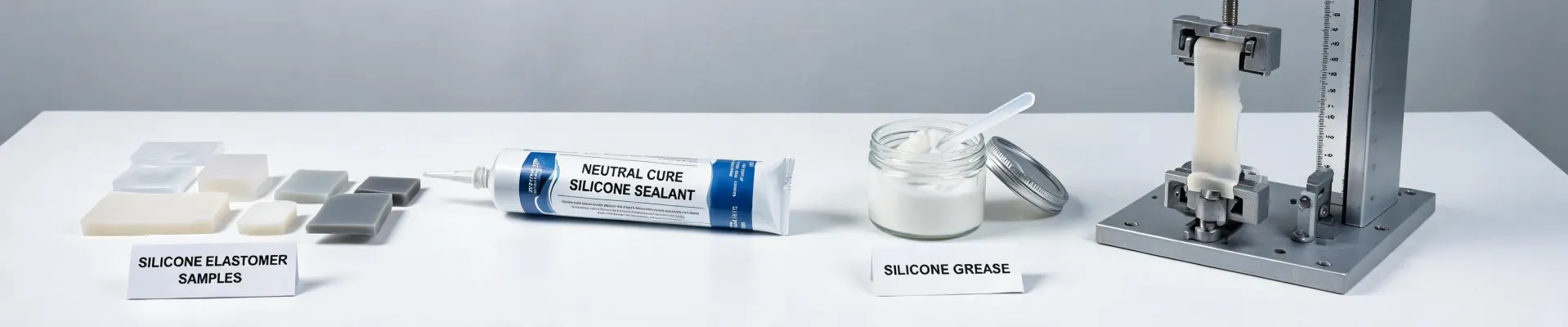
Silicone (and most adhesives) bond poorly to low-surface-energy plastics — and that's exactly the family Amcor works in most: polypropylene (PP) and polyethylene (PE). These materials sit around 29-31 dynes/cm, while silicone adhesives typically need 38+ dynes/cm for proper wetting. PET is friendlier (roughly 41-44 dynes/cm untreated, depending on grade) but still needs help.
In practice, silicone sealing rings, silicone-coated release liners, or silicone gaskets on PP/PE containers will peel unless the surface has been treated — plasma, flame, or a primer. If you're specifying a silicone component against a plastic body (closure liners are the classic case), test adhesion before the production run, not after. We learned that one the expensive way in 2023.
4. Which plastic cutter should I keep on hand for emergency modifications?
Different plastics, different tools. A cutter that glides through PET will skate across PP and send you to urgent care.
- PET (rigid sheet): sharp utility knife or rotary cutter. Score and snap for thin gauge.
- PP/PE: serrated blade or heavy-duty scissors — smooth blades slip on the waxy surface.
- Thick-wall or multi-layer: fine-tooth saw blade, not a knife.
- Anything you're cutting at 11 p.m. before a shipment: clamp it first. Every ER visit I've heard about (and there are more than you'd think) involved an unclamped sheet and a dull blade.
Keep a rotary cutter, a serrated utility blade, and a small fine-tooth saw in the same labeled drawer. Replace blades before they dull — a dull blade is more dangerous than a sharp one, and it tears the material edge, which your customer will notice.
5. When does resin epoxy make sense in a packaging emergency?
Resin epoxy is great for some fixes and useless for others. The line is surface energy, again.
Standard two-part epoxy bonds well to PET, rigid PVC, ABS, and metal. It bonds poorly — sometimes catastrophically — to untreated PP and PE (same low-energy problem as silicone). If you need to bond PE or PP under deadline, use a specialty adhesive (cyanoacrylate with primer, or a hot-melt designed for low-energy surfaces) rather than generic epoxy.
Time matters too: 5-minute epoxy cures fast but has lower shear strength; 24-hour structural epoxy is stronger but useless if your shipment leaves in four hours. For emergency repairs that aren't structural, 5-minute epoxy is fine. For anything load-bearing or food-contact, don't improvise — use the specified adhesive or replace the part. I've watched a "quick fix" with epoxy fail at the fill line and cost six figures in lost product. Not worth it.
6. What's the real bottleneck in a 48-hour packaging turnaround?
Here's the uncomfortable truth: production speed is rarely the bottleneck. In our internal data from 200+ rush jobs, the breakdown looks roughly like this:
- Compliance documentation (especially regulated end uses): 4-24 hours
- Approval chain on the buyer's side: 2-24 hours
- Material availability: 0-72 hours (this one kills deadlines)
- Actual production: 6-18 hours
- Last-mile logistics: 4-24 hours
What most people don't realize is that "standard turnaround" at a packaging plant usually includes buffer time for queue management. When you pay for rush, you're not just speeding up the machine — you're removing your order from the buffer queue. If the material isn't in stock or on a nearby truck, no rush fee moves the timeline. That's the part vendors don't advertise.
7. How do you avoid the "cheap quote, expensive delay" trap?
Our company lost about $2,400 in 2022 because we tried to save $300 on a rush order. Here's what happened.
We'd been using three reliable suppliers for emergency jobs. A new vendor quoted 40% less on a time-sensitive order, and we took it. The order arrived with the wrong wall thickness — technically within tolerance, functionally useless for the client's filling line. We paid $800 in rush fees to a backup vendor and still missed the original delivery date by six hours. The client kept the relationship (thankfully) but added a penalty clause to future POs.
Everything I'd read about procurement said competitive bidding always wins. In practice, for rush orders, relationship consistency beats marginal cost savings almost every time. We now have a policy: emergency orders go to one of three vetted suppliers, even if a new quote is cheaper. The $300 savings wasn't worth the $2,400 lesson.
8. What's one thing most buyers get wrong about rush packaging orders?
Most buyers assume a rush order is the same process as a standard order, just faster. It isn't. Rush orders typically run through a different workflow — simplified approvals, pre-allocated material, sometimes a dedicated line. That's why asking a standard-order supplier to "just speed it up" often fails.
The other thing people miss: sometimes the standard lead time is actually faster than the rush process, if the material is already in stock and the spec is simple. I've seen buyers pay a 30% rush premium for a job that would've shipped in the same window at standard pricing (ugh). Before you pay for rush, ask two questions: is the material in stock, and is this a simple spec? If both answers are yes, standard might be fine.