Before I get into specific products, here's where this guide comes from. I'm a quality/compliance manager at a company that supplies silicone-based products to industrial and building customers. I review roughly 200 unique material certifications a year—first articles, batch records, and test reports. Over the last six years, I've rejected about 7% of first deliveries. That number is not because suppliers are bad; it's because the difference between "good enough" and "leaks in the field" rarely shows up on the front page of a data sheet.
Is Silicone Thermoplastic or Thermoset? The Short Answer Is Incomplete
One of the most common search terms that lands here is "is silicone thermoplastic or thermoset." It's a fair question, but the shortcut answer—"silicone is a thermoset"—doesn't cover every silicone product.
Conventional silicone rubber, after curing, is a thermoset. The polymer chains are cross-linked, so it doesn't melt and re-flow when you heat it. That cross-linked network is what gives silicone its heat resistance, oxygen resistance, and compression set behavior. A thermoplastic, by contrast, softens when heated and hardens when cooled.
Then there are thermoplastic silicone vulcanizates and silicone-thermoplastic alloys. Those materials process more like thermoplastics, but they're not the same as a pure thermoset silicone. If your print just says "silicone," ask questions. The cure chemistry matters for the seal, the mold, and the long-term performance.
It's tempting to think you can pick a silicone product by one property—durometer, colour, or price. That's the oversimplified path. I tell people in our lab the same thing: identify the cure system before you compare anything else.
Buying Dow Corning 737 Silicone Neutro on Mercado Livre
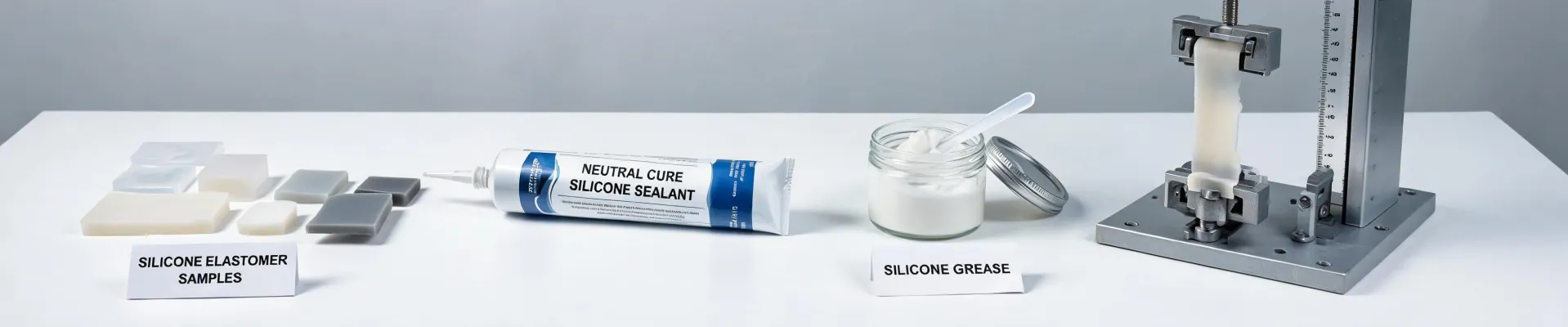
If your search looks like "dow corning 737 silicone neutro mercado livre," you're probably not looking for a lab-grade material. You need a neutral-cure silicone sealant that won't corrode sensitive surfaces or smell like vinegar while it cures. That's exactly why 737 gets specified.
According to Dow Corning's published product literature, 737 is a one-part, neutral-cure silicone adhesive/sealant. "Neutral" means the cure by-product is not acetic acid. Acid-cure silicones are fine for many jobs, but they're the wrong choice around electrical terminals, certain plastics, and some metal assemblies.
Here's where the marketplace gets risky. Mercado Livre is not a distributor. It is a marketplace with many sellers, and "neutral" on the front label doesn't always match what's in the cartridge. In Q1 2024, we received a batch of "neutral" sealant from a new supplier that turned out to be an acid-cure product. The pH check wasn't in our normal incoming inspection because we'd used that supplier for over a year. That mistake cost us a $22,000 redo and delayed a launch by six weeks.
If you're buying Dow Corning 737 from a marketplace, do three things:
- Check the batch code and expiry date on the cartridge, not just the box.
- Look for a supplier who can show the product data sheet or certificate of analysis. If they can't, keep looking.
- Test-cure a small sample before you trust it. Squeeze a dab on a piece of aluminum foil and leave it for 24 hours. It should cure through, not stay oily on the surface.
This isn't paranoia. The cost of a bad sealant is usually much higher than the few dollars you saved on the listing.
Dow Corning Silicone Colours: A Quality Trap
The phrase "dow corning silicone colours" sounds like a paint swatch. In practice, colour is one of the most underrated variables in silicone quality. A red silicone and a black silicone can feel identical in your hand and still have very different physical properties.
Pigments can affect cure behavior, especially with addition-cure systems. A pigment that works in one base can inhibit the platinum catalyst in another. I learned this in 2022 when we qualified a green O-ring compound that looked great on paper—same durometer, same tensile strength as the black version—but had noticeably higher compression set in the field. The colour wasn't cosmetic. It changed the material.
So if you need a specific colour for branding, ask for a separate compound approval for that colour. Do not accept "same silicone, different pigment." And don't use colour as an indicator of temperature rating. Red silicone isn't automatically high-temperature silicone.
O-Ring Boss Fittings and the O-Ring Challenger
O-ring boss fittings are a different part of the silicone world, but they're often mixed into the same project. An O-ring boss fitting uses a straight thread with an O-ring seated in a recess on the fitting body. The O-ring seals against a machined boss in the port. The threads do the retaining, not the sealing. The relevant standards are SAE J1926 for inch-series and ISO 6149 for metric ports.
I call one recurring leak the "o-ring challenger." It isn't a product. It's the situation where a fitting passes the initial pressure test but then weeps after a few thermal cycles. When we tear it down, the O-ring is rolled, pinched, or cut. The material is almost never the culprit. The assembly process is.
Here's what I recommend for O-ring boss fittings:
- Lubricate the O-ring with a compatible grease before assembly. A thin film is enough. Packing the whole cavity with grease can cause the O-ring to float out of its groove.
- Use a grease that's compatible with both the O-ring elastomer and the system fluid. For many static O-rings, silicone grease like Molykote 111 is a common choice. If you're using a silicone O-ring, check compatibility carefully—silicone on silicone may not be ideal.
- Do not use PTFE tape on the threads of an O-ring boss fitting. This is the counterintuitive one. Tape belongs on tapered pipe threads. On ORB fittings, tape can shred and get into the hydraulic system, or stop the O-ring from seating properly.
- Torque to specification. Over-torquing can deform the O-ring and turn a small leak into a blown seal.
How to Decide Which Scenario Is Yours
If you made it this far, the useful summary is not "silicone is the answer." It's "the answer depends on what you're sealing and how the material will be cured."
Here's how I break it down in our review meetings:
- If you're sealing a static joint that will see air, moisture, or mild chemicals, a neutral-cure silicone sealant like Dow Corning 737 is a solid starting point.
- If you're assembling an O-ring boss fitting in a hydraulic or pneumatic system, you're not looking for a sealant. You need an assembly grease, a clean boss, and the right torque.
- If you need coloured silicone parts, choose the compound first, then qualify the colour. Never let someone send a "generic equivalent" colour and call it identical.
There are situations where silicone isn't the right material. PTFE seals, polyurethane, or metal gaskets might be better for some chemical or temperature environments. I've turned down projects where a silicone spec was chosen just because the customer liked the word "silicone." That's part of my job.
So, is silicone thermoplastic or thermoset? For most cured silicones, it's thermoset. But the better question is whether your application needs a thermoset at all, or whether you need a grease, a sealant, or a coloured compound with certified properties.
If you are still unsure, go back to the data sheet. Not the marketplace title, not the friendly sales email—the data sheet. Then check the batch code. That habit has saved me more times than I can count, and it will save you a headache.