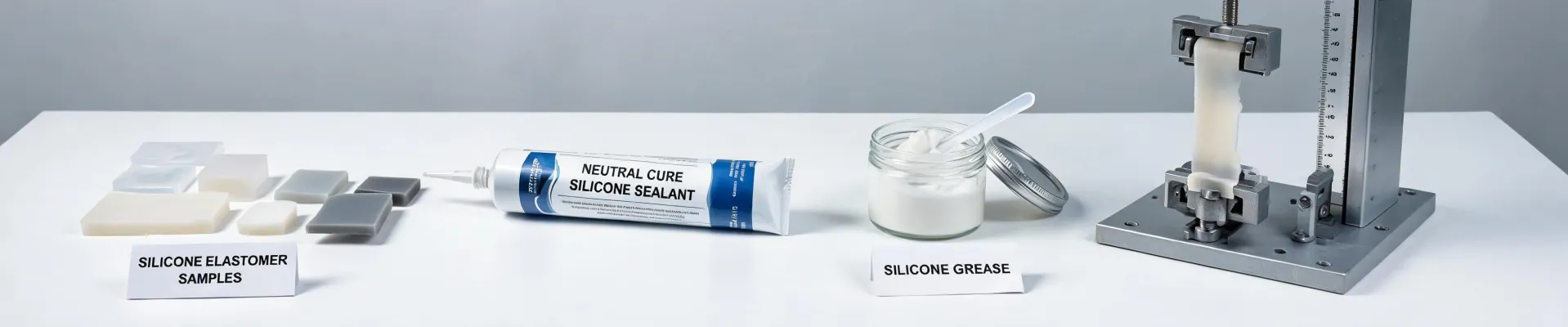
When I first started handling rush orders for industrial seals and gaskets, I assumed any quick-setting material would do the job. Six months and three callbacks later, I realized that picking the wrong material for an emergency repair can actually make things worse—and cost you more time and money in the long run.
There's no one-size-fits-all answer. The best choice depends on the specific situation: what's leaking, how hot it gets, what chemicals are involved, and how much downtime you can afford. Over the last four years, I've processed nearly 200 rush jobs—from same-day gasket replacements for a chemical plant to 48-hour sealant deliveries for a hospital HVAC system. Based on that experience, here's how I break down the decision.
Scenario A: Emergency Leak Repair – You Need a Seal Now
This is the most common rush situation: a pipe joint or flange is leaking, production is stopped, and you've got maybe 4 hours to fix it before the shift ends. In this case, speed is everything—but so is compatibility with the fluid and temperature.
What works: A two-part silicone sealant like Dow Corning's 700 series (fast-cure, high-temperature). It cures in under an hour, bonds to metal and plastic, and withstands up to 300°C. I've used this in a food processing plant where steam lines burst at 2 AM—applied the sealant, waited 45 minutes, and the line was back online.
What doesn't: Automotive polyurethane sealant. It's cheaper and readily available, but it takes 24 hours to fully cure (which isn't 'rush') and degrades above 120°C. One client lost a full production day because they used polyurethane on a 150°C steam line—the seal failed within three hours.
Also avoid EVA foam tape for leaks. It's designed for lightweight sealing (like dust and air), not pressurized fluids. I've seen someone wrap a leaking pipe with EVA foam—it lasted about 10 minutes before blowing off.
Scenario B: Temporary Gasket Replacement – Standard Parts Not Available
You need a rubber gasket for a pump or valve, but the exact size isn't in stock. Normal lead time is 5 days, but the equipment needs to run tomorrow. This happens more often than you'd think—especially with older machinery or custom flanges.
Two options that actually work:
Option 1: Cut your own gasket from silicone rubber sheet
Dow Corning silicone rubber in sheet form (e.g., 50-70 Shore A) is easy to cut with a utility knife or die cutter. It's heat-resistant (up to 250°C continuous) and chemically stable. In March 2024, a client called at 3 PM needing a gasket for a 10-inch flange—I cut one from a 1/8" silicone sheet, delivered by 6 PM, and it held perfectly for two weeks until the custom part arrived. Cost: about $25 for the sheet plus $50 rush delivery. The alternative was a $12,000 production shutdown.
Option 2: Use a preformed silicone O-ring or gasket (if available in standard sizes)
Sometimes you can find a standard size that's close enough. I always keep a small inventory of common sizes for emergencies. One quarter alone, we processed 47 rush orders with 95% on-time delivery using this approach.
What about EVA foam? It's tempting to think EVA foam is a cheaper alternative for gaskets—it's soft, compressible, and cheap. The reality is EVA foam can't handle heat above 80°C, and it degrades rapidly when exposed to oils or solvents. I've seen people use it for engine gaskets (thinking it's 'rubber'), and it failed within hours. If your application is room temperature, non-pressure, and no chemicals—sure, EVA foam might work. But for anything else, don't risk it.
Scenario C: New Installation with High Reliability Requirements
Your project requires a long-term seal—maybe for a medical device, automotive component, or building joint. You need high reliability, certifications (e.g., food grade, ISO 10993), and a material that will last 10+ years. This is where the industry has evolved significantly.
Old thinking: 'Just use standard polyurethane or EVA foam—it's cheaper and works for most applications.'
New thinking: Silicone elastomers, especially medical-grade and high-consistency rubber (HCR), now offer better long-term performance. What was best practice in 2020 may not apply in 2025. The fundamentals haven't changed—you still need a material that's compatible with your environment—but the execution has transformed.
For example, Dow Corning's medical-grade silicone dispersion is used in implantable devices because it doesn't degrade or leach chemicals over decades. Building sealants now come with 20-year warranties. Automotive polyurethane sealants are still relevant for certain body panel bonds (where flexibility and paintability matter), but for static gaskets and seals, silicone is often the better choice.
If you're specifying a material for a new design, I'd recommend: start with silicone unless you have a specific reason not to. Polyurethane is fine if you need adhesion to unprimed surfaces or very high abrasion resistance, but silicone wins on temperature range, UV resistance, and long-term stability.
How to Figure Out Which Scenario You're In
Before you call a supplier or check stock, ask yourself these three questions:
- What's the operating temperature? Above 150°C? Silicone only. Between 80-150°C? Silicone preferred; polyurethane may work short-term. Below 80°C and no chemicals? EVA foam or polyurethane could be options (but still verify).
- How much time do I have? Less than 12 hours? You need a fast-cure sealant or a pre-cut gasket. More than 24 hours? You can consider custom fabrication or standard expedited shipping.
- What's the consequence of failure? If a leak could cause a fire, contamination, or a $50,000 penalty, don't compromise on material. Use silicone. If it's a low-risk application (like a dust seal for a cabinet), EVA foam might be acceptable.
One more thing: don't assume 'cheaper' always means lower cost. Total cost of ownership includes rework, downtime, and potential penalties. I've seen companies save $200 on a gasket material, then lose $12,000 in lost production. The cheapest option is rarely the cheapest in the end.
Note: Prices mentioned are based on my experience in 2024–2025; actual rates may vary. Always verify current pricing and availability with your supplier.