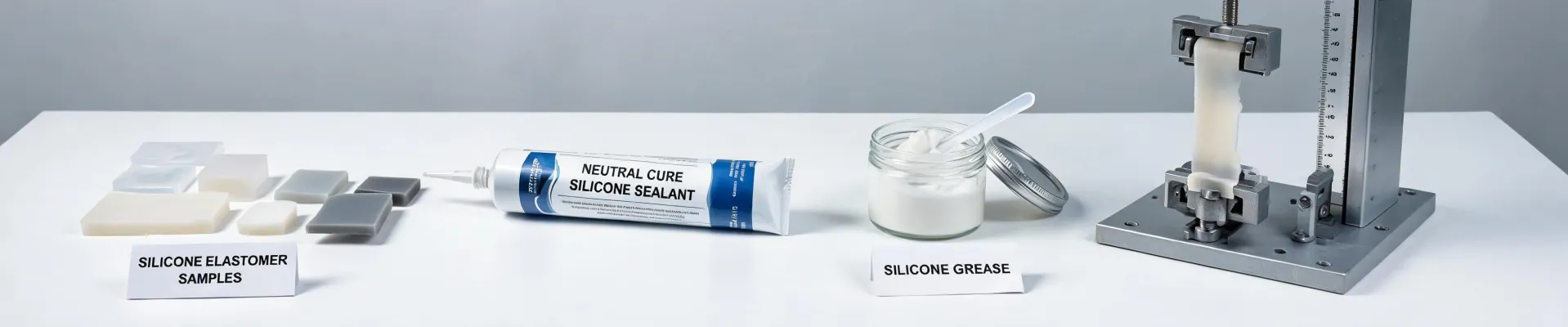
I have a rule now: the cheapest quote is the most expensive thing we buy. It sounds backwards, and in a procurement spreadsheet it definitely looks backwards. But after coordinating rush orders for industrial materials for years, I'd rather defend a premium price than explain a shutdown caused by a bargain part.
In my role coordinating emergency replacements for manufacturing and maintenance teams, I have handled a lot of urgent material requests. Last quarter alone, we processed 47 rush orders with 95% on-time delivery. Some were same-day turnarounds for clients who had a line down and a deadline. Again and again, the root cause wasn't a bad design or a demanding client. It was a savings decision made at the wrong step.
Cost per unit is not cost per outcome
A purchase order shows a unit price. The financial close shows the real cost. The difference is everything in between: installation, testing, downtime, rework, expedited shipping, and the hour you spent arguing with a vendor at 6 p.m. on a Friday. That is the gap I care about.
Take nitrile rubber tubing. Nitrile is a standard choice for oil-resistant and chemical-resistant lines. At a glance, three manufacturers look the same. But if the cheapest tubing has a lower durometer or a thinner wall, it might kink under suction or fail a pressure test. I know because we tried it once. We saved $80 on an order of nitrile rubber tubing that was, on paper, equivalent. Instead of getting a line back in service, we spent $400 on a rush replacement plus six hours of labor. The net loss was over $600. The budget option cost more than the premium one would have.
Rubber pads are the same story. Pads used as vibration mounts, gasket backings, or equipment feet are easy to treat as commodity parts. But material matters. A silicone rubber pad handles heat differently from a urethane pad, and a cheap SBR pad can degrade in oil. When you compare quotes, all of them are called rubber pads. They are not the same thing.
Time is a line item
In an emergency, time matters more than price. If a machine is down, every hour of downtime is costing production output. The question is not whether a replacement part is 10 percent cheaper than the original. The question is whether it will work the first time, on the existing timeline.
In March 2024, I got a call 36 hours before a client's deadline. A clear silicone they had applied stayed tacky, and they needed a reformulated product quickly. Normal turnaround for the right replacement sealant was three to five days. We had two hours to decide before the rush processing cutoff. In hindsight, I should have checked the cure data on the original material earlier. But with the clock running, I went with a known quantity: Dow Corning clear silicone. The per-tube cost was higher than the generic clear silicone sitting in the client's warehouse. That generic tube was already the problem. The client's alternative was pulling apart freshly assembled units and missing final inspection, which would have triggered a $50,000 penalty. The more reliable silicone cost an extra $14 per tube. That trade I will make every time.
(Note to self: check the cure time on the data sheet before promising a 24-hour turnaround. It saves everyone the panic.)
What is TPU rubber? And why the name matters
One recurring mistake in rush triage is treating material names as interchangeable. This is where the question what is TPU rubber? comes up. TPU stands for thermoplastic polyurethane. It is not chemically a rubber like nitrile or EPDM; it is a plastic with rubber-like flexibility. TPU can be very useful. It has good abrasion resistance, clarity, and flexibility. But it behaves differently under heat, solvents, and compression. If you need oil-resistant tubing and swap in TPU because it is in stock and cheaper, you might get lucky. Or you might find it swelling after a few weeks.
Silicone has the same issue. Silicone is not one generic material. Cure system, durometer, service temperature, and additives all change the product. A spark plug boot silicone and a food-grade silicone tube are not interchangeable. Product names exist for a reason. That is why Dow Corning AllGuard silicone elastomeric coating deserves a read of the data sheet. Earlier that year, a customer needed to recoat a critical exterior wall in under 48 hours because their standard coating had peeled off. We supplied AllGuard as an engineered replacement, and the crew applied it in two passes. The unit cost was higher than what they had used before. But the previous coating had already failed once; another cheap coating was not a solution.
It is also a coating that cures to a thick, rubber-like waterproof membrane, not an acrylic paint with a little silicone added. If someone substitutes a generic elastomeric coating to save money, the weatherproofing may fail much sooner. Per FTC guidelines (ftc.gov), performance and environmental claims need substantiation. The same logic applies internally: if a product claims silicone elastomeric, ask for the properties, not just the label.
The budget objection
Let me address the obvious objection: what about budget constraints? I get it. Procurement teams are measured on savings, and the premium product looks bad in a vendor comparison table. To be fair, if the application is truly low-risk and the material spec is simple, a lower-priced option might be fine. But the decision should be based on risk, not just price. I would rather answer for a value decision than tell maintenance, we saved $300 on the part but the line cannot run until Tuesday.
Granted, not every application needs a premium material. Some industrial rubber parts are genuinely commodity items. But the burden of proof should be on the substitution. If a quote is significantly lower than the others, ask why. Sometimes the answer is a different material class, like TPU offered where nitrile was specified. Sometimes it is a thinner wall or a shorter service life. Sometimes it is just a smarter process. You will not know unless you ask.
This is why our company now has a 48-hour buffer policy for critical material changes. It came from a 2023 incident where we tried to save about $200 on a standard part instead of using the supplier we trusted. A minor material deviation showed up during installation. The line stopped anyway, exactly when we were trying to avoid overtime. That $200 savings turned into a $1,500 problem when we had to airfreight the correct material.
What I would do differently
- Ask for the technical data sheet before the purchase order, not after the failure.
- Test the material in the actual environment when possible: temperature, chemical exposure, compression.
- If a quote is much lower than the others, ask why. The answer can save you money, or it can save you from a costly surprise.
There is something satisfying about seeing a coated roof pass its water test the first time. It is less dramatic than an emergency, but that is the point: if you paid for the material with the right chemistry, the emergency never has to happen.
So no, I will not say the most expensive option is always the best. But I will say this: in critical applications, the lowest purchase price is often the highest total cost. Dow Corning clear silicone, Dow Corning AllGuard silicone elastomeric coating, nitrile rubber tubing, TPU rubber, rubber pads—none of these are only a unit price. They are a promise under a set of conditions. When time is short and a line is down, I want the material with the known track record. Usually, that is probably not the cheapest one. Sometimes it is. But I will never assume the price tag tells the real story.