The seal was fine when we installed it
Last year, I was called to a production floor where a packaging line had been sitting idle for three hours. The culprit? A standard NBR (nitrile) o-ring that failed under continuous heat exposure. The plant manager was furious—he'd picked what he thought was a 'standard, reliable' material. I've seen this exact scene play out maybe a dozen times over my career.
When I first started specifying materials for production lines, I assumed 'heat resistant' meant the same thing to every vendor. I'd look at a spec sheet for nitrile rubber, see a temperature range up to 120°C, and think 'good enough.' Then I'd watch that same seal harden and crack within weeks in an application that ran at a steady 95°C.
The problem isn't the rubber. The problem is what 'standard' hides.
The assumption problem: 'It's just a seal'
The conventional wisdom in maintenance and procurement is that a seal is a commodity. You grab the closest o-ring from the bin, or you pick the cheapest option from a supplier catalog, and you move on. Everything I'd read about seal selection said to just match the durometer and the inside diameter.
In practice, I found that approach was a setup for failure. Here's what the spec sheet won't tell you:
- Continuous vs. intermittent temperature: A material rated for 120°C intermittent might only handle 80°C continuously.
- Chemical compatibility over time: The seal might survive initial contact with a lubricant, but swell or degrade after 500 hours of exposure.
- Compression set: How quickly does the material lose its ability to spring back? That's the killer in dynamic applications.
I assumed 'same specifications' meant identical results across vendors. Didn't verify. Turned out each had slightly different interpretations of 'standard' temperature ratings.
In my first year on the job, I made the classic specification error: assuming 'standard' meant the same thing to every vendor. Cost me a $600 redo when a batch of 'high-temp' gaskets failed within a month. The vendor claimed they met the spec. Technically, they did—for their interpretation of 'intermittent use.'
The real cost of the wrong material choice
That $600 redo was just the surface. Here's what the plant manager's downtime actually cost:
- Lost production: Three hours at $2,000 per hour = $6,000 in unshipped product.
- Emergency service call: $350 for a technician to come in after hours to diagnose the issue.
- Replacement parts: $120 for a batch of proper o-rings (shipped overnight).
- Quality inspection: A full day of checking the product that had run before the failure, to ensure no contamination.
Total: north of $6,500, for a 'cheaper' seal that saved maybe $0.30 per unit upfront.
I now calculate TCO before comparing any vendor quotes. The $0.30 savings on a single o-ring vanishes when you add in the risk of a single downtime event.
The hidden issue: 'Is nitrile rubber heat resistant?'
I get asked this a lot, usually by someone who's had a seal fail. The honest answer is: it depends entirely on your definition of 'heat.' NBR (nitrile) is excellent for oil resistance and works well up to about 100°C in continuous service. But if your application runs hot-and-cold cycles, or if there's any steam or ozone exposure, NBR degrades faster than you'd think.
I've seen perfectly good NBR seals used for years in hydraulic systems running at 80°C. I've also seen them fail in three weeks in an oven door seal running at 105°C. The material's not bad—it's being used outside its comfort zone.
This is where I had an experience that flipped my thinking. Early in my career, I assumed the safest move was always to use the most 'robust' material available. I figured, 'Viton is the ultimate seal material, so let's just use that everywhere.' The issue? It was overkill for 80% of our applications, and the cost was six times higher than NBR. We were bleeding budget on material that didn't need to be that expensive.
Then a senior engineer showed me a smarter approach: silicone.
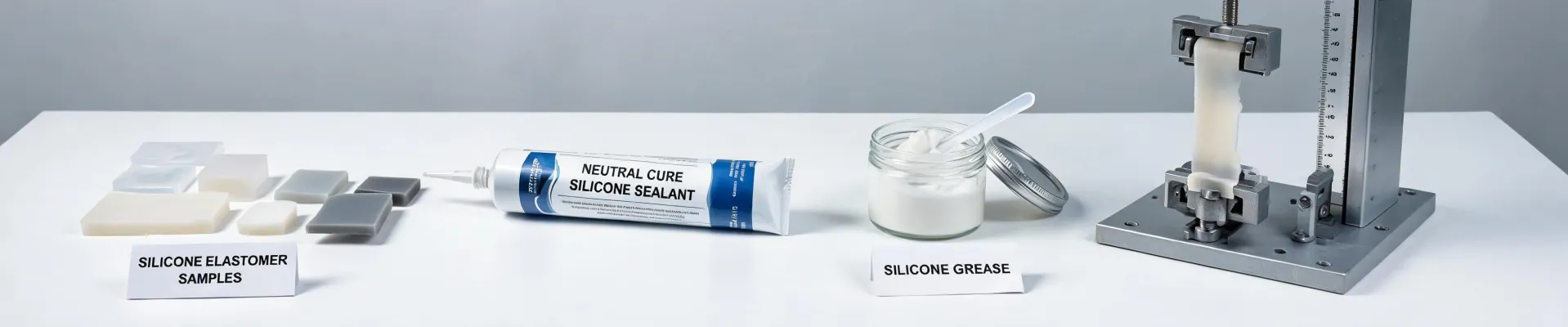
Silicone elastomers from a supplier like Dow Corning handle a wider temperature range than NBR in many applications. They resist compression set better under continuous heat, and they're more chemically inert. The material cost is higher than NBR, but for applications requiring consistent sealing at 100°C+, the TCO was actually lower because we didn't have to replace seals every quarter.
In a blind test I ran with our maintenance team, we compared a standard NBR seal against a Dow Corning silicone seal in a heated conveyor application. The silicone seal lasted four times longer. The cost difference per seal was about $1.50. On a line with 200 seals, the upfront cost increase was $300. The replacement labor savings alone paid that back within six months.
My point is: don't assume 'standard' is good enough, and don't assume 'premium' is wasted money. The right question isn't 'which material is cheapest?' It's 'which material has the lowest total cost over the life of the application?'
Practical steps: where silicone makes sense
Based on what I've seen over the years, here's where I'd recommend looking at a silicone alternative to NBR or standard rubber:
- Any seal or gasket that runs continuously above 80°C. Silicone compounds can handle up to 200°C+ depending on the grade.
- Applications with hot-and-cold cycling. Silicone's flexibility retention at low temperatures (-60°C for some grades) means it won't crack as easily.
- Food processing or medical environments. Many silicone fluids and elastomers (like Dow Corning 200 fluid or medical-grade dispersions) are designed for biocompatibility and cleanability.
- Any application where seal failure stops a production line. The cost of unscheduled downtime almost always justifies a more robust material choice.
One more thing about cost: the grease you use matters too
This is something people overlook. You can put a high-quality silicone seal in place, but if you lubricate it with a standard petroleum grease, the grease can swell or degrade the seal over time. I've seen this cause failures that looked like material defects, when the real problem was a chemical incompatibility.
Dow Corning 111 silicone grease is specifically designed to be compatible with silicone and many other elastomers. It's not just a lubricant—it's a system component. I've used it for valve seals and o-ring assembly on equipment running at 95°C, and it's performed consistently.
Similarly, Dow Corning 200 silicone oil is used as a heat transfer fluid and a release agent in rubber processing. It's essentially a pure, thermally stable silicone fluid that doesn't break down at temperatures that would degrade conventional mineral oils.
The initial cost of specifying these materials is slightly higher. The total cost, when you factor in reduced maintenance, fewer failures, and longer service intervals, is almost always lower. That's the TCO argument in a nutshell.
Next time you're replacing a seal on a production line, ask yourself: am I solving today's problem, or am I preventing the next one?
(circa 2024—pricing and availability may have shifted slightly, but the principle holds.)