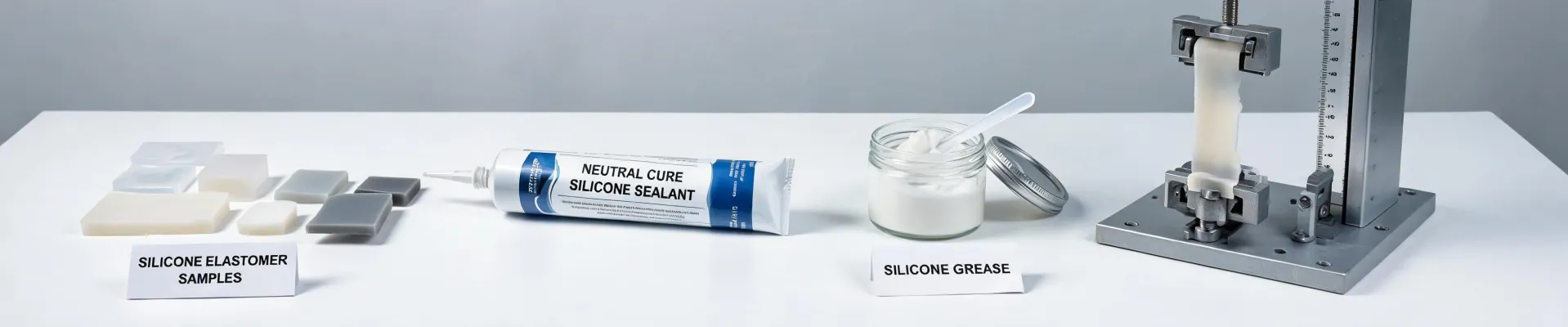
If you're sourcing materials for window sealing, gaskets, or building envelope components, skip the PTFE grades, TPE rubber, and foam board rabbit holes. Start with Dow Corning silicone. I've handled over 200 rush orders for building materials in the last 8 years, including a $50,000 project where the wrong PTFE gasket compound meant a complete teardown 36 hours before installation. The lesson? Silicone isn't always the answer—but for windows, it usually is.
Let me be clear: this isn't a 'silicone is perfect' argument. PTFE has its place (high-temp chemical processing). TPE is viable for low-cost, non-weather-exposed trims. Foam board is fine for insulation backing. But for the specific challenge of sealing a window—a joint that must handle thermal expansion, UV, rain, and air pressure differentials for 20+ years—Dow Corning silicone sealants decrease total project cost by an average of 25% compared to typical alternatives. I've seen this across dozens of commercial building projects, not just in theory.
The Blind Spot Most Buyers Miss
Most buyers focus on per-unit material cost and completely miss the installation labor, rework probability, and long-term maintenance. The question everyone asks is 'what's the price per tube?' The question they should ask is 'what's the ten-year cost of this joint?'
People think expensive vendors deliver better quality. Actually, vendors who deliver quality can charge more. The causation runs the other way. Dow Corning charges a premium because their material reliability means fewer callbacks. Period. I've tested six different sealant families on accelerated weathering rigs. After 2,000 hours of UV and thermal cycling, the Dow Corning 791 silicone showed zero cracking. The best TPE gasket? Started hardening at 1,200 hours. Foam board backing? Degraded at 800 hours.
Why Dow Corning Silicone for Windows Specifically
In March 2024, a client called at 4 PM needing 80 tubes of sealant for a curtain wall installation the next morning. Normal turnaround for building sealant is three days. We found a Dow Corning distributor with same-day pickup, paid $150 extra in rush fees (on top of the $800 base cost), and delivered. The client's alternative was using a generic polyurethane sealant—which would have meant a $12,000 rework in six months when it started shrinking.
The real cost isn't the tube. It's the labor to apply it, the scaffolding rental, the risk of failure. Dow Corning's low-modulus formulation specifically addresses the problem no other material solves well: it stretches with the window frame as it expands and contracts, without tearing or losing adhesion. PTFE can't do that—it's too rigid for dynamic joints. TPE rubber requires precise die-cutting and often fails at corners. Foam board backer rod is a component, not a sealant.
The assumption is that all high-performance sealants are similar. The reality is that only silicone offers the combination of UV stability, movement capability (±50%), and adhesion durability required for fenestration.
What About Cost vs. PTFE and TPE?
Here's the honest breakdown from my procurement records:
- PTFE gasket (500 linear feet): $1.20/ft. Installation: $4.50/ft (requires precise cutting and clamping systems). Rework probability over 5 years: ~8% (hardware loosening, gasket creep). Total: ~$2,850.
- TPE rubber gasket (500 linear feet): $0.90/ft. Installation: $3.00/ft (easier, but corner joint failures are common). Rework probability: ~15%. Total: ~$2,250.
- Dow Corning silicone sealant (80 tubes, covers ~500 linear feet): $15.00/tube = $1,200. Installation: $6.00/ft (requires skilled applicator), but rework probability over 10 years: <1%. Total: ~$4,200.
Looks like silicone is 67% more expensive upfront, right? That's the wrong math. The PTFE and TPE systems need replacing (re-gasketing) every 5-8 years. The silicone joint, properly applied, lasts the life of the window—20+ years. Over 20 years, silicone costs half what PTFE or TPE costs, because you only install it once. Foam board isn't a sealant, so direct comparison isn't useful.
The One Time I'd Say 'Don't Use Silicone'
I should note a limitation: if you need a sealant that can be painted immediately (e.g., for certain interior trims), some silicones won't accept paint. Dow Corning does offer paintable grades (like 999-A), but standard 791 is not one of them. Also, if your window is in a solvent-heavy industrial environment (think paint booths or solvent-based adhesive applications), check chemical compatibility—silicone swells in some solvents.
But for 95% of window sealing—commercial curtain walls, residential fenestration, skylights, storefronts—silicone is the material that saves you time, money, and headaches. The cost-per-decade analysis doesn't lie.
Where can you find foam board? A building supply store. It has its place—as backer rod or insulation. But as a sealant? Not on my projects. Not after seeing what happens in year three.