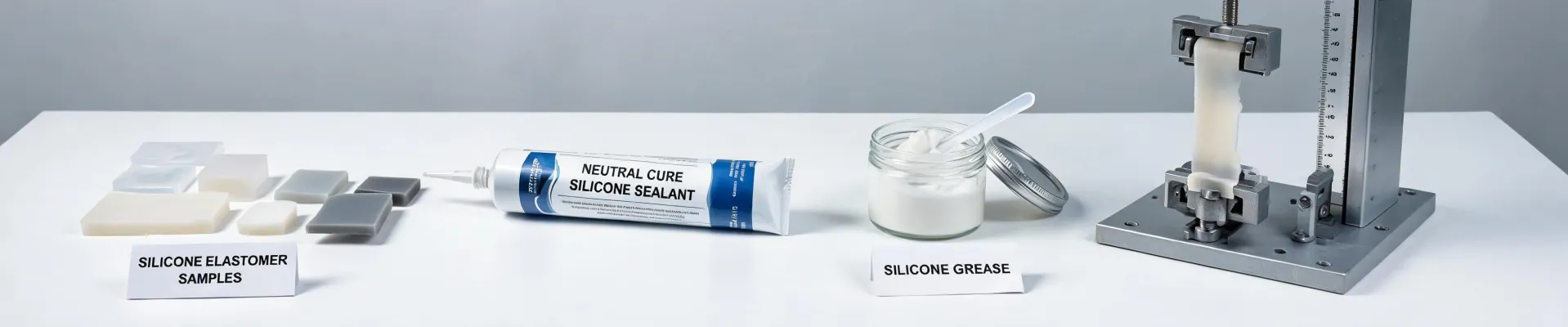
Let's cut to it. The biggest lesson I learned after a $3,200 silicone order went completely sideways: Dow Corning makes stellar products, but you have to know your exact spec requirements before you call your rep. I didn't, and that mistake cost my company a couple thousand and a three-day production delay. Here's what happened and what I now consider mandatory knowledge before buying any Dow Corning sealant, grease, or elastomer.
I'm a procurement specialist handling technical material orders for a mid-size industrial fabricator. Been at this for about six years now. The March 2022 fiasco changed how I think about “standard materials.” I didn't fully understand the importance of cure system chemistry until a foreman showed me a vat of ruined sealant and the look on his face said more than any report could.
The Trigger: A Failed Bonding Job
We needed a general-purpose sealant for sealing electronic enclosures against moisture. The application called for adhesion to polycarbonate and aluminum. Dow Corning 732 is the go-to, right? It's on the top of every list. So we ordered 24 tubes. Seemed like a no-brainer.
One week later, the sealant hadn't cured properly in several assemblies. The smell—that typical vinegar (acetic acid) odor—was overwhelming. A quick chat with our Dow Corning technical support representative (who, I should note, was extremely helpful) revealed the truth: Dow 732 is an acetoxy-cure sealant. The acetic acid released during curing can cause stress cracking in some polycarbonates. Our specific grade was borderline, and the combo of humidity and slight surface contamination tipped it over the edge.
Result: 24 tubes, 16 assemblies to redo, plus a re-shipment of the correct neutral-cure product (Dow 736, a non-corrosive sealant) under expedited shipping. Ballpark cost of the mistake: around $1,200 in scrapped parts and product, plus a $350 rush fee. And a lot of red faces.
Four Crucial Dow Corning Lessons (Learned the Hard Way)
After that and a few other bumps (like ordering the wrong grease for a food-grade mixer—ouch), I developed a pre-order checklist. If you're sourcing Dow Corning materials, save yourself the trouble. I've personally caught 47 potential errors using this checklist in the past 18 months.
1. The 732 Trap: It's Perfect—Until It's Not
People think expensive vendors deliver better quality. Actually, vendors who deliver quality can charge more. The causation runs the other way. Same with 732. It's a fantastic, high-strength sealant with excellent adhesion. But its acetoxy cure system makes it corrosive to some metals (like copper and brass) and incompatible with many plastics.
- Use 732 for: Glass, aluminium, ceramic, wood, and many general bonding tasks where corrosion isn't a concern.
- Avoid 732 for: Polycarbonate, acrylic, polycarbonate blends, copper, brass, and any application where the acidic vapors can't fully vent.
- Try instead: Dow Corning 736 (neutral cure) or 791 (a construction-grade neutral cure).
2. O-Ring & Seal Material: Forget Generic Kits, Focus on Shore & Chemistry
I once ordered a cheap generic O-Ring Pick Set (a 400-piece kit) and assumed every standard O-ring in it was fine for light exposure to silicone grease. That's wrong. Dow Corning provides specific recommendations for seal lubricants based on the base polymer of the O-ring (Viton, EPDM, NBR, etc.). A standard silicone grease (like Dow Molykote 55) is great for some applications but can cause swelling in others.
If I remember correctly, the rule of thumb is:
- Silicone O-rings: Use Dow Molykote 111 or similar.
- EPDM O-rings: Use silicone grease or polyalkylene glycol-based lubricants. Avoid petroleum greases.
- Viton O-rings: Avoid silicone-based lubricants unless specifically approved. Use a fluorinated grease like Krytox.
Key lesson: The O-ring pick set is for identification and emergency replacement, but you must verify the material compatibility before applying any Dow lubricant. I now keep a small chart taped to our stockroom shelf.
3. Molykote & Silastic: Not All Mixing Rules Are Obvious
This gets into chemistry territory, which isn't my core expertise. What I can tell you from a procurement perspective is this: Never buy a two-part Silastic (like Dow Corning 915 or 916) without verifying the specific mixing ratio and working time for your shop's temperature.
We once ordered a Dow Corning Silastic for a potting application. The datasheet said a 10:1 ratio. Our team, rushing to meet a deadline, mixed it using the rapid cure catalyst (A component) and the base (B component) incorrectly because the containers weren't labelled clearly on our end. The result? A hard, skinned-over mess that cost us a 3-lb cartridge and an hour of cleanup.
My process now:
- Before ordering, confirm with our engineering team which Molykote or Silastic specific formulation is needed.
- On delivery, immediately check the lot numbers and batch-specific instructions (if any).
- For custom formulations, ask the Dow Corning rep for a mixing guide specific to our application.
4. The "Silicone Bronze" & "Rubber Recyclability" Confusion
A couple of tangential keywords that trip people up:
Silicone Bronze: This is a metal alloy (typically copper and tin), not a silicone material. We got a call once from a new designer who thought “silicone bronze” was a flexible material. It's not. It's a hard, cast bronze. Important to know if you're sourcing for a project that might use both a bronze component and a Dow silicone sealant—ensure the silicone is compatible with the bronze's surface (most neutral cure silicones are okay, but avoid acetoxy).
Is Rubber Recyclable? This is a huge question. The short answer is: it depends on the type of rubber. Silicone rubber (like Dow's Silastic) is technically recyclable, but the infrastructure is very limited compared to natural rubber or EPDM. Most silicone rubber waste from our shop ends up in landfills. We've tried to find a recycler for our scrap from potting and molding operations—found one in Europe, but shipping costs kill the benefit. It's a real gap in the industry.
Conclusion & Boundary Conditions
Dow Corning silicones are a game-changer for reliability. I wish I could say they're the perfect fit for every industrial problem. They're not. And the vendor who tells me “these are best for everything” loses credibility.
When Dow Corning is the right call: When you need a proven, high-reliability material for demanding applications (high heat, moisture, electrical insulation, medical-grade requirements). Their technical support is genuinely excellent—I call them often.
When to look elsewhere: If you need a cheap, disposable seal for a low-stress application, a generic silicone from a bulk supplier might suffice. If you need extreme chemical resistance to hydrocarbons, look at Viton or other fluoroelastomers. And if you need something that's easily recycled (for environmental compliance), silicone is currently a difficult material to manage in many regions.
Bottom line: A specialist who knows their limits is more trustworthy than a generalist who claims to do everything. I'd rather work with a Dow rep who says, “This isn't our strength for your specific application—here's who can help,” than a salesperson who tries to sell me the 732 for every job. Take it from someone who paid the tuition.