I thought I knew O-rings. I was wrong.
When I took over purchasing for our manufacturing facility in 2020, I thought I had a handle on the basics. O-rings are simple, right? Rubber rings that go in a groove. You buy them by the dozen, and they either fit or they don't. That was my thinking—until we had a seal failure that cost us a weekend of downtime and a lot of awkward conversations with the production manager.
Fast forward to 2024, and I’ve processed roughly 60-80 orders annually across 8 vendors for everything from standard nitrile packs to custom silicone seals. The question I get most often from new colleagues isn't technical. It's 'what's the cheapest option?' But that's the wrong question. The better one is: 'what's the true cost of getting it wrong?' That shift in thinking is what saved our department thousands.
This article isn't about advanced engineering. It's for the admin buyer, the facilities manager, the person who, like me, orders these things because someone has to. Let me walk you through the blind spots I hit—and the surprisingly simple lessons that stuck.
The Surface Problem: O-rings fail too often
Most buyers focus on per-unit pricing and completely miss the factors that cause a seal to fail prematurely. We were buying standard Buna-N O-rings (the cheap, black ones) for a few cents each. They worked fine for water lines. But when we tried using them for a grease application on a packaging machine, they swelled, softened, and leaked in less than a week. The production line stopped. The maintenance crew was grumpy. The CFO noticed the overtime.
Our story isn't unique. According to a common industry statistic (often cited in mechanical engineering references), a significant percentage of O-ring failures—some estimates say over 70%—are attributed to incorrect material selection, not manufacturing defects. Yet, most of us buying them have no material science background. We go by price, size, and maybe a vague description like 'high temp' or 'oil resistant'.
The question everyone asks is: 'Is this O-ring the right size?' The question they should ask is: 'Is this O-ring the right material for this specific chemical, temperature, and pressure?'
The Deep Reason: We don't understand the material behind the shape
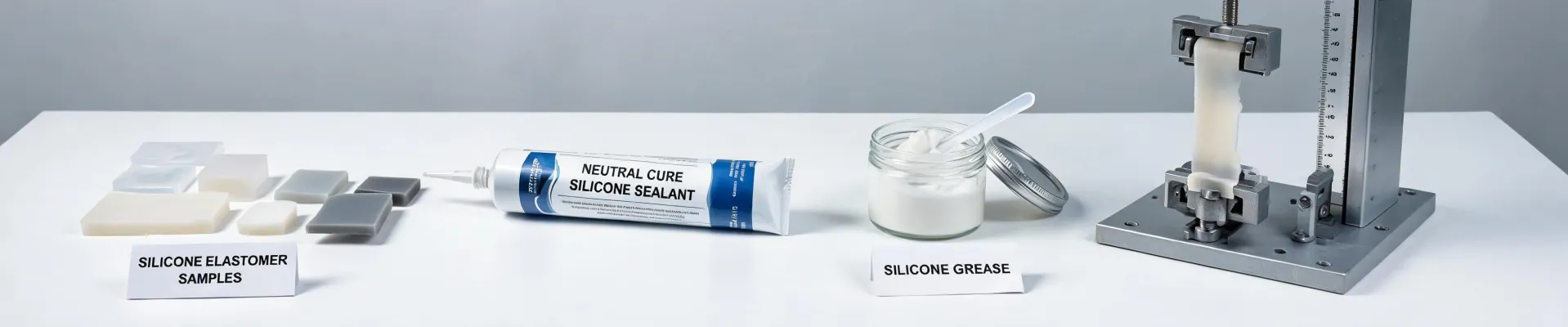
This was the surprising part for me. It's not about the O-ring as a shape. It's about the polymer it's made from. An O-ring is just a delivery system for a material property. The rubber compound defines everything: its flexibility, its resistance to oil, its ability to handle heat, its lifespan in UV light.
I discovered this the hard way with a dow corning silicone black O-ring. We had a request for a seal that needed to withstand intermittent contact with steam and low-temperature flexibility (our cold storage area). Our standard vendor recommended a generic black rubber. I almost approved it. Then I remembered a past mistake with a failed seal from a condenser unit. So glad I paused. I dug into the spec sheet and realized we needed a silicone-based compound. The generic option would have cracked in the cold and degraded in the steam within months.
The 'rubber is rubber' thinking comes from an era when industrial sealing was less specialized. That's changed. Today, the difference between a seal that lasts 5 years and one that fails in 5 weeks is entirely about the compound.
I should add that this is where I first started paying attention to brands like dow corning. Their entire product line is built around material science, not just molding shapes. You don't buy a generic 'silicone O-ring'. You might be buying something based on their high-performance elastomers, which are designed for specific ranges of chemical resistance and thermal stability. That specificity is what prevents the hidden cost of failure.
The Cost of Ignoring the Material: It's not just the part price
Let's talk money. Because that's what will get your attention in a budget meeting.
The cost of a single O-ring is negligible—often under $1. The cost of that O-ring failing can be astronomical. A failed seal can cause:
- Downtime: Lost production time for a line is easily $10,000+ per hour.
- Repairs: Cleanup, part replacement, and labor can add up quickly.
- Secondary damage: Contamination of products or damage to adjacent machinery.
- Safety risks: Leaking chemicals or high-pressure fluids are not just expensive, they're hazardous.
I have a specific example. In 2023, we tested 4 different budget vendors for a seal used in a hydraulic press. The cheapest option was $0.30 per O-ring. The premium option—a known brand with traceable material specs—was $1.20. The budget vendor's seal failed after 3 months, causing a fluid leak that damaged a $2,000 motor. The total cost of that 'savings' was $2,000 in repairs plus 4 hours of lost production. My VP was not happy.
That failure made me look bad to my operations director. The unreliable supplier cost us more than money. It cost us trust. Now, I have a policy: I don't approve any seal for a critical application without a material data sheet. That's my non-negotiable. If I can't see the polymer type, temperature range, and durometer, I won't order it. It's saved our accounting team a lot of trouble.
I also learned about 'total cost of ownership'. The base product price is just the entry fee. The real cost includes the risk of failure, the cost of expediting replacements, and the administrative time spent dealing with returns and vendor disputes. The lowest quoted price is rarely the lowest total cost.
How to Actually Solve It: A simple framework for the non-engineer
So, how do you, the admin buyer with no chemistry degree, avoid these traps? Here's the framework I built for myself over the last few years. It's not perfect, but it works for 90% of our needs.
Step 1: Define the application in plain terms. Don't just say 'needs a rubber strip'. Say: 'Needs to seal a water connection at 80°C, with occasional contact with a mild cleaning chemical, in a static groove.' Write that down. Send it to your supplier. A vague request gets a vague (and risky) recommendation.
Step 2: Ask for the material data. Always ask: 'Can you provide a material data sheet or a known compound reference?' If they can't, be very cautious. For many common applications—like a standard oil seal—a known brand like a dow corning silicone elastomer or a standard Buna-N might be perfectly fine. But you need to match the material to the job. For example, if you need a seal that resists oxidation and weathering, a silicone-based compound is often a great choice. Their standard silicone compounds are reliable for a broad range of temperature and general sealing.
Step 3: Consider the shape, but don't overcomplicate it. Most of the time, a standard round cross-section O-ring (defined by an internal diameter and a cross-section thickness) is fine. You can find those anywhere. But sometimes you need special profiles—like a triangular rubber strip for a custom groove or a rubber threshold seal for a door. For those custom shapes, you're even more dependent on the material supplier. A bad custom profile made from a bad compound is a recipe for disaster.
Step 4: Build a relationship with a knowledgeable vendor. The fastest way to stop making mistakes is to stop buying from the cheapest catalog. Find a distributor who asks questions. The best ones will say, 'For that application, I'd recommend a silicone compound with a 50-durometer hardness, not a standard nitrile.' They'll educate you. That partnership is worth far more than a few cents per part.
In my experience, once you understand that an O-ring's job is to manage the relationship between two surfaces and a fluid or gas, everything else clicks. It's not just a piece of rubber. It's a critical component. Treat it that way, and you'll save yourself the headaches I had in 2020.
(Pricing is for general reference only. Actual prices vary by vendor, specifications, and time of order. Verify current material data and application requirements with a qualified supplier.)