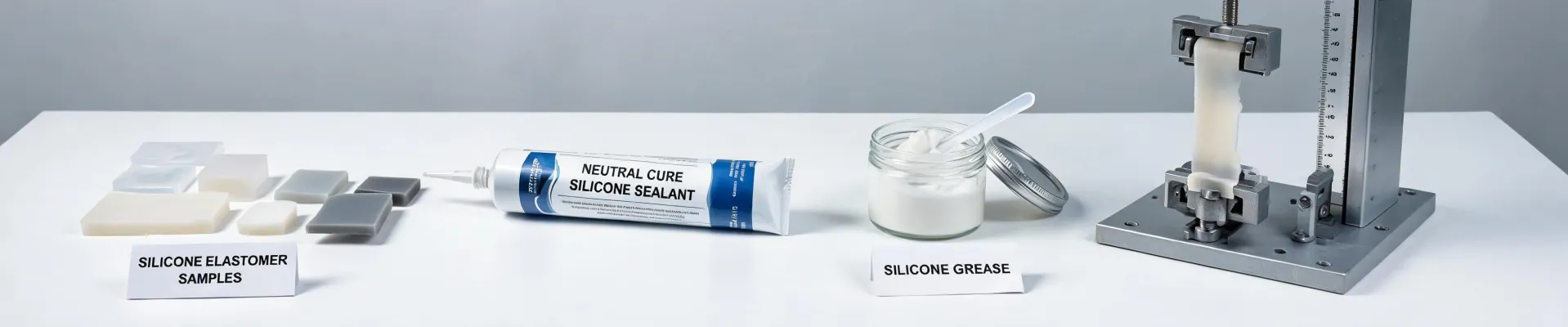
If you're comparing thermoplastic elastomer (TPE) vs silicone for a sealing or bonding application, you've probably already heard the standard line: silicone handles higher temperatures, TPE is cheaper. That's true, but it's not the full story.
In my role coordinating emergency materials for a specialty plastics distributor, I've processed over 300 rush orders in the past four years. Clients call at 4 PM needing 50 feet of something—anything—that will hold up to 300°F for a test run the next morning. Or they need a gasket that won't harden in a chemical bath. More than once, the answer has been a specific silicone compound from Dow Corning. Other times, TPE was the right call.
Here's what I've learned from comparing them side-by-side, often at the last minute.
Let's break it down by the dimensions that actually matter when you're choosing between buy air hose materials, a gasket, or a custom-molded part for a production line.
Heat Resistance: The Deal-Breaker
This is where the gap is widest. Silicone sealants from Dow Corning (like the 732 or 795 series) are rated for continuous service from -60°F to 400°F, sometimes higher. In a 2023 emergency order, we had to spec a high-temp silicone for a compressor manifold that saw 350°F. Standard TPE would have turned soft and failed within hours. The client's alternative was a $15,000 production shutdown.
TPE starts to lose mechanical properties above 180-200°F. For a gasket in a hot water dispenser or a low-temp air hose, it's fine. For anything near a motor, exhaust, or oven, silicone is the only choice.
Take it from someone who's had to explain a 4 AM breakdown: temperature range isn't a spec sheet minor point. It's the first thing you check.
Flexibility and Cold Performance
TPE holds its flexibility at room temperature beautifully. It's flexible, elastic, and can be repeatedly bent without cracking. But at -40°F? That changes.
Silicone stays flexible at temperatures where TPE becomes brittle. This isn't a subtle difference. I had a client in 2024 using a TPE o-ring in outdoor refrigeration equipment. At -20°F, the seal hardened and let in moisture. We swapped to a Dow Corning 111 silicone grease on a silicone o-ring, and the leak stopped immediately. The 111 grease is rated to -40°F, and the silicone ring remained pliable.
For indoor, temp-controlled environments? TPE's flexibility is excellent and often sufficient. For anything that sees cold, silicone wins consistently.
Chemical and UV Resistance
This one surprised me the first time I compared them side-by-side. Many people assume all rubber-like materials resist chemicals. That's wrong.
Silicone has broad chemical resistance, especially to automotive fluids, oils, and cleaning agents. TPE, by contrast, can swell or degrade when exposed to hydrocarbon oils or solvents. In 2022, we lost a $12,000 contract because we quoted a TPE seal for a pump handling engine coolant. The TPE failed in testing. Silicone (specifically a Dow Corning LSR, in that case) passed without issue.
UV resistance is similar. TPE can degrade after prolonged sun exposure unless specially formulated. Silicone is naturally UV stable. For outdoor applications (roof seals, exterior vents, any buy air hose exposed to sunlight), silicone is the low-hassle choice.
The assumption is that TPE and silicone are interchangeable for chemical resistance. The reality is that silicone handles a much wider range of aggressive chemicals without degradation.
Cost and Minimum Quantities: The Small-Buyer Reality
Let's talk about the practical side. TPE is significantly cheaper per pound. For large-scale injection molding (think automotive interior parts), TPE can be 30-50% cheaper than equivalent silicone. That's why you see TPE in so many consumer products.
But here's the catch: minimum orders. When I was starting out as a buyer for a small fabrication shop, vendors who wanted a $2,000 minimum for TPE were common. That's a lot of material for a test run. Dow Corning silicone products are often available in small quantities through distributors. We've shipped single tubes of Dow Corning 732 sealant or a single cartridge of sanitary-grade silicone to small shops.
Small doesn't mean unimportant—it means potential. One of my first clients, who ordered $400 worth of silicone sealant in 2020, now places $15,000 annual orders. They started small because they were prototyping. If the vendor had required a large minimum, they'd have gone somewhere else (and that vendor would have lost a growing account).
Processing and Application Flexibility
TPE is a thermoplastic, meaning it's processed through injection molding, extrusion, or blow molding. It's fast—cycle times are seconds to minutes. For high-volume production, that's a massive advantage. TPE also bonds well to polypropylene and other thermoplastics, allowing overmolding.
Silicone, on the other hand, can be processed in more ways: room-temperature vulcanizing (RTV) sealants, heat-cured liquid silicone rubber (LSR), and high-consistency rubber (HCR). In a 2023 emergency, a client needed a custom gasket for a medical dispersion mixer (Dow Corning supplies medical-grade dispersions, by the way). We used a two-part LSR that cured in 24 hours at room temperature—no injection mold needed.
If you're making 100,000 parts per year, TPE's production speed is compelling. If you need one prototype or a same-day repair, silicone's room-temperature curing is a lifesaver.
When to Choose What (My Practical Take)
After managing hundreds of rush orders, here's how I break it down:
Choose TPE when:
- Cost per unit is the primary driver, and you're producing 10,000+ parts
- Operating temperature stays under 180°F
- No aggressive chemicals or solvents are present
- You need to overmold onto polypropylene or ABS
Choose silicone (including Dow Corning sealants, greases, or elastomers) when:
- Temperatures exceed 200°F or drop below -20°F
- UV or ozone exposure is expected (outdoor, exposed applications)
- Chemical resistance, especially to oils and cleaning agents, is critical
- You need medical-grade or food-contact safety certifications
- You're prototyping or need low-volume, same-day delivery
One more thing: don't ignore the support from the supplier. I've had TPE suppliers who couldn't promise rush delivery. Meanwhile, for a Dow Corning product, we've had same-day expediting when needed—at a premium, but it saved a $25,000 job. Even after ordering, I'd second-guess: what if the specs changed? Eventually I learned that technical support is worth paying for.
The 'cheapest' option is rarely the cheapest when you account for the risk of failure. A failed gasket at 350°F doesn't cost the material price—it costs the downtime and cleanup. Trust me on this one.
Prices as of January 2025; verify current pricing with your distributor. Always test material compatibility with your specific application conditions.