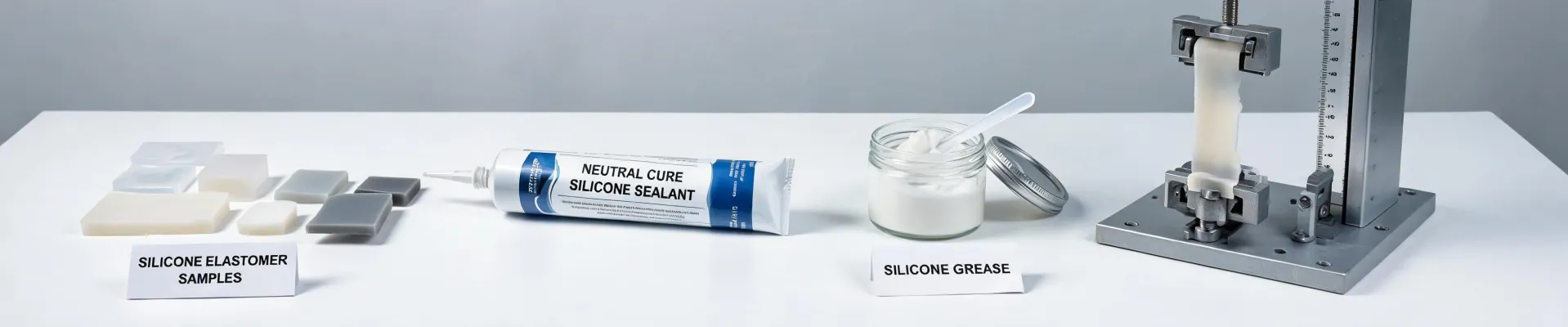
The most expensive silicone is the one that fails when you're up against a deadline. I know that sounds like a slogan, but I've got the receipts—literally.
I'm a procurement manager. For the past 12 years, I've bought silicone sealants, adhesives, greases, elastomers, and a pile of other materials for construction and industrial projects. In that time, I've personally made and documented 23 significant mistakes, totaling roughly $86,000 in wasted budget. That's not a flex. That's my tuition. I now maintain my team's pre-purchase checklist so they don't repeat my errors. This is the part where I tell you to learn from my pain so you don't have to pay the same tax.
The Curtain Wall That Made Me a Believer
My first big lesson came in 2019. We were on a curtain wall project with a tight schedule, and the spec called for Dow Corning 795 structural sealant. My procurement instinct kicked in: "There's got to be a cheaper option." There was. It was roughly 40% less per tube. I ordered it, approved it, and we started glazing.
The adhesion test results came back and 43 out of 200 glass panels failed. Not a borderline fail. Full-on peel. We had to remove every single panel, clean the frames, reorder the specified silicone, and wait for delivery. The rework cost about $23,000 and the project missed its deadline by three weeks. The client didn't fire us, but they came close.
What I didn't understand at the time is that a product like Dow Corning 795 is not just a tube of goo. It's batch consistency, published technical data, on-call support, and a documentation trail that the building inspector will actually accept. Most buyers focus on per-unit pricing and completely miss that. The question everyone asks is "what's your best price?" The question they should ask is "what happens if this fails in the middle of a project?"
The question everyone asks is "what's your best price?" The question they should ask is "what happens if this fails in the middle of a project?"
What got me was the supplier's technical representative. When we called about the failure, they didn't just say "wasn't our product." They came to the site, ran tests, and showed us exactly why the cheap alternative couldn't meet the specification. That kind of support isn't in the per-unit price. It's in the brand's overhead. And you only notice it when you need it.
Even after we switched back to the specified product, I kept second-guessing myself. What if my memory of the test numbers was wrong? It was three weeks of stress before the new adhesion test came back clean. (note to self: don't let that doubt become a reason to ignore specs.)
Same Math, Smaller Scale
Bathroom silicone taught me the same lesson in a smaller, smellier way. In 2022, I decided to redo our main bathroom. The contractor said "silicone is silicone." That's a legacy myth from an era when there were maybe three kinds of silicone on a shelf. Today, a $6 tube and a $12 tube can have completely different base chemistry, fungicide levels, and curing behavior. I bought the cheap "mold resistant" stuff because it was half the price. Within a year, it was black in the corners. Out came the razor blade, then the caulking gun again. The mistake cost me two weekends and about $400 in rework—not to mention a spouse who reminded me about it for months.
The label said "mold resistant," but it didn't say "for wet areas" or "neutral cure." If you're sealing a shower, you want a silicone that cures into a tough, flexible rubber, not one that releases acetic acid and slowly shrinks. That's the difference between bathroom silicone and a general-purpose caulk that happens to come in a tube. Most homeowners don't know the difference. Reputable brands put the right information on the label, but you have to look for it.
Same story with Dow Corning silicone black. I used a cheap black silicone around some exterior window frames because it looked fine and the sun wouldn't hit it directly. Turns out it wasn't UV-stable. It cracked, and water got into the frame. So glad I caught it before the drywall damage got worse. Almost left it for another season, which would have turned a $300 repair into a $1,500 one.
The pattern doesn't stop at construction. In the lab, buyers constantly compare polystyrene vs polypropylene tubes and choose the cheaper option. Polystyrene is clear and works for many applications, but it's not for high-speed centrifugation or certain solvents. Polypropylene costs more, but it's chemical-resistant and autoclavable. A colleague once bought polystyrene centrifuge tubes for a solvent-based protocol. The tubes cracked, the sample was destroyed, and the experiment—which had a review deadline—was delayed by a week. The cost difference was under $100. The delay cost us far more.
And yes, silicone baking molds belong in this conversation too. Not all silicone is food-grade, no matter what the label says. Per FTC guidelines (ftc.gov), claims like "food-safe" have to be truthful and substantiated. A lot of off-brand molds use vague language that sounds fine but isn't backed by evidence. I bought a cheap baking mat once. It smelled like burning rubber at 180°C and my cookies ended up tasting like a garage. One use, straight to the trash. Waste of money, waste of time, but at least nobody got hurt.
The Objection: "You're Just Defending Premium Prices"
I get that objection. It's fair. Not every project needs a premium product. If I'm sealing a planter box or baking a test batch, I'm not paying for certified structural performance. But when you're working against a deadline, "probably fine" is the most expensive option on the table.
Think about what "certainty" actually does under time pressure. It removes the chance of a second round. It lets you commit your crew, your schedule, and your client relationship to a result you can defend. In an emergency, the value of a known reaction curve is enormous. An uncertain cheap option isn't cheaper; it's just a lottery ticket with a longer payout delay.
What I buy with a brand like Dow Corning is not just silicone. I'm buying predictable delivery, technical support that picks up the phone, and documentation that won't cause an argument at final inspection. That certainty has a cost. It's usually a small percentage of the overall project. In exchange, I don't have to pay for rework, delays, or lost credibility.
What My Checklist Actually Looks Like
So what's on my checklist? For any silicone product going into a project, I ask five things: Do we have the manufacturer's technical data sheet? Does the product meet the stated standard or code? Is there a batch number or traceability record? Does the supplier offer real support if something goes wrong? And, most importantly, what's the cost of failure versus the cost of the upgrade?
The last question is the one that changes buying decisions. $10 extra per tube is nothing if the alternative is a three-week delay. $50 extra for polypropylene tubes is nothing if the alternative is losing a week of research. $5 extra for a food-grade baking mat is nothing if the alternative is serving rubber-flavored cookies to a client.
None of this means you should always buy the most expensive option. It means you should price the risk, not just the product. When I started doing that, my rework budget went down dramatically. I still make mistakes, but they're smaller ones, and they're never because I ignored the price of uncertainty.
I'll keep paying a little more for certainty, because I've already paid a lot more for doubt. If that makes me the guy who over-specifies silicone, fine. My checklist is full of expensive entries, and you're welcome to learn from them for free.