-
The Cheapest Quote Won't Be Your Cheapest Order—Here's the Math I Use
-
Argument 1: The 3/4" foam board lesson
-
Argument 2: Substituting 3M 540 polyurethane sealant taught me a hard lesson
-
Argument 3: The polycarbonate visor spec isn't just a spec
-
Argument 4: The strange case of thermoplastic rubber shoes
-
The counterargument I hear every quarter
-
What I actually do now
The Cheapest Quote Won't Be Your Cheapest Order—Here's the Math I Use
I'm the procurement manager at a mid-size industrial supplier under the 3m brand. I've run our material budget for six years, negotiated with more than 40 vendors, and logged every single order in our cost tracking system since 2019. My job is buying raw resin, foam board, sealants, and safety gear for our plant—and also making sure the sheets we sell meet the specs our customers actually need. I see both sides of the material conversation, and I'll say this plainly: the lowest unit price on a quote is usually a signal that you're about to pay more somewhere else.
That's not a philosophical position. It's a spreadsheet conclusion. In 2023, we audited $180,000 in cumulative material spending across four years, and the pattern was hard to ignore—orders where we chased the lowest line-item price had 2.3x more rework events than orders where we specified the material first and then compared prices. The "cheap" orders weren't cheap. They were just expensive in installments.
Here's how I've learned to think about it, using four material categories we buy every quarter.
Argument 1: The 3/4" foam board lesson
We buy 3/4" foam board by the pallet for display and packaging work. In early 2023, we switched to a vendor quoting 22% less than our previous supplier. My manager at the time framed it as a straightforward win. I approved it because the spec sheet matched. (Note to self: "spec sheet matched" and "material performs the same" are not synonyms.)
Two weeks later, we shipped a 60-unit display order. Within ten days, we had 14 returns. The foam board had warped in transit because the density wasn't actually the same—the 3/4" foam board thickness was right, but the cell structure was lighter and it couldn't hold its shape under our humidity conditions. Our team spent 40 hours reworking the displays, and I had to explain to our client why the displays they'd seen in the proof looked different in their showroom.
The rework cost us $4,200 in labor and $1,800 in expedited replacement board. The original "savings" on that order was $860. A standard 3/4" foam board pallet runs roughly $2.80-4.50 per sheet depending on density and quantity (based on distributor quotes, March 2025; verify current pricing).
Here's what I say now when someone asks how to attach foam board together: the attachment method is secondary. The first question is whether the board itself will hold its shape for the life of the installation. If the board warps, every mechanical fastener and adhesive you spec is irrelevant. I'd rather pay 22% more and skip the rework conversation.
What most people don't realize is that a lot of foam board suppliers quote by thickness alone, because that's what buyers ask for. Density, cell structure, and facing adhesion are where the cost difference lives—and where the performance difference hides.
Argument 2: Substituting 3M 540 polyurethane sealant taught me a hard lesson
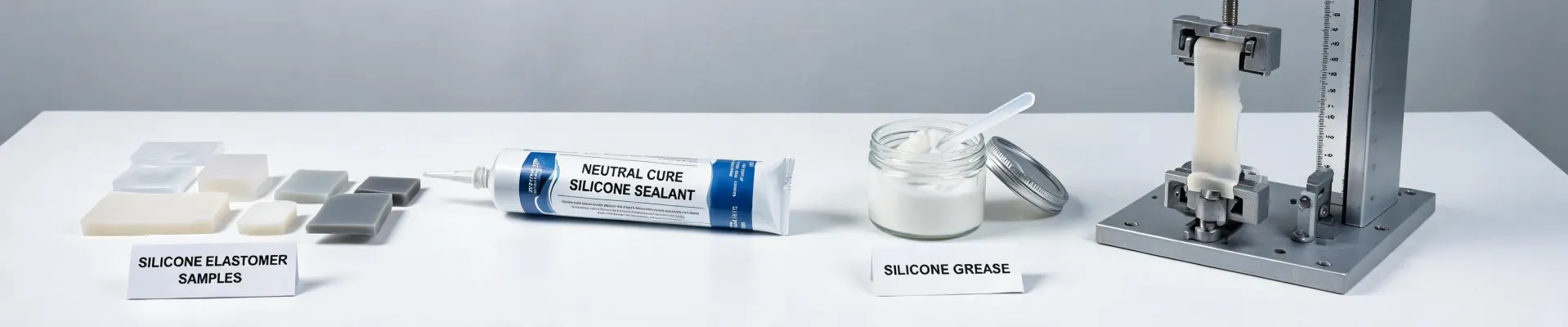
We use 3M 540 polyurethane sealant on exterior signage and panel bonding jobs. It's not the cheapest tube on the shelf—current pricing is roughly $12-18 per 10 oz cartridge depending on quantity and distribution (based on distributor quotes, March 2025; verify current pricing). For a $4,200 annual contract, I once asked a junior buyer to find a "comparable" alternative to cut the line item. He came back with a generic polyurethane at $6 a tube.
We used it on a 40-panel exterior job in Q2 2023. Six panels failed within four months—adhesion loss along the bottom edges, exactly where thermal cycling is hardest on the joint. We had to send a crew back, remove the failed panels, clean the old adhesive off the substrate, and reinstall with 3M 540. That "saving" of roughly $400 in sealant cost us $3,100 in labor and travel, plus a very uncomfortable client call.
The 12-point checklist I built after that mistake now includes a "sealant substitution" line where we're required to document the original equipment manufacturer spec and get written confirmation from the manufacturer's tech line before switching. Hasn't failed us yet.
I don't have hard data on how many generic polyurethanes fail in exterior applications, but based on our five years of project records, my sense is the failure rate is somewhere between 15-20% in high-thermal-cycling conditions. The premium product's failure rate in our own tracked jobs is closer to 2%. That's a difference that shows up in the budget eventually.
Argument 3: The polycarbonate visor spec isn't just a spec
We supply face shield visors to industrial safety clients, and the polycarbonate sheet we use is spec'd to match the performance characteristics of the 3M face shield visor polycarbonate—impact resistance, optical clarity, and thickness tolerance. I've had buyers ask me to sub a cheaper polycarbonate to save $0.40 per visor. My answer is always no, and here's why.
A visor that cracks under impact isn't a cost saving. It's a liability event waiting to happen. We quote our visors with a known polycarbonate grade and a documented impact test. If a client wants to compare us against a cheaper source, I'll send them the test data and let them decide. So far, nobody's taken the cheaper visor on a job where their safety officer was involved.
This is where I'd push back on the "always negotiate down" school of procurement. Some line items are not negotiation targets—they're risk management line items. You negotiate your markup on consumables. You don't negotiate on the barrier between a user's face and an impact.
Argument 4: The strange case of thermoplastic rubber shoes
This one surprised me. We buy thermoplastic rubber shoes (TPR safety footwear) for our shop floor—the slip-resistant kind that holds up to solvent exposure and long shifts. When I first took over the safety equipment budget, I treated TPR shoes like any other commodity. I found a supplier quoting $18 a pair versus our $31 incumbent. I celebrated. Then I tracked the data.
Never expected the "cheap" shoes to cause the problem we had in 2024. Turns out the TPR compound was harder and less slip-resistant in the wet floor areas near our wash stations. We had three minor slip incidents in eight weeks—no serious injuries, thank God, but each one meant a report, a lost shift, and a compliance conversation I'd rather not repeat. We switched back within the quarter. The $13 per pair "saving" across 60 pairs was $780. The incident investigation costs, overtime, and time I spent on compliance paperwork added up to roughly $2,400.
So glad I caught that pattern early. Almost kept the cheaper shoes for another quarter because the returns were "minor." One more incident would have escalated our workers' comp review and cost us far more than the shoes ever saved.
This is context-dependent, and I'll be honest about that: our shop floor has wet zones that maybe 30% of similar operations don't have. If your footwear program is for a dry environment, the calculus on TPR spec may be different. I can only speak to what our numbers showed.
The counterargument I hear every quarter
"But we have budgets, and sometimes the budget doesn't allow for the premium option." I get it. I live inside that budget. But here's the reframe that's saved me: prevention is not an add-on to the budget—it's the cheapest line item in it.
Five minutes of verification beats five days of correction. A 12-point checklist is the cheapest insurance we have. And when you model total cost of ownership across a year, the "expensive" items usually win—not because they're magically better, but because the cheap items generate rework you didn't plan for.
It's tempting to think you can compare unit prices and let math do the rest. But if the unit price doesn't capture the density, the sealant class, the impact spec, or the slip rating, you're comparing a number to a hidden risk. And the risk always wins eventually.
What I actually do now
Every material request that comes to my desk gets three steps before it goes to a quote comparison. First, what's the functional requirement? Second, what failure mode are we protecting against? Third, what's the rework cost if it fails? Only then do I look at price.
That sequence has reduced our material-related rework by an estimated 60% since 2023, based on our internal incident and rework logs. Not because we found better vendors—because we stopped buying the wrong thing first and finding out later.
If you're a procurement person reading this, the next purchase order you approve might be the cheapest line item on your desk. Before you sign off, ask yourself one question: if this fails, what does the six-week bill look like? If you can't answer that, you haven't finished the comparison yet.
That's not cynicism. It's just the cheapest form of prevention I've found.