It sat in our review queue for two days. A request for 500 custom silicone seals—listed as "rubber components"—from a medical-device startup I'd never heard of. Total order value: $1,840. Our sales admin had already started drafting a polite decline when I asked her to hold off.
To be clear about my lens: I'm the quality/compliance manager at a silicone materials manufacturer—the name on the datasheets is Dow Corning. I review every specification before it leaves the building, roughly 200 unique items a year. I've rejected close to 8% of first deliveries in 2024, mostly over surface contamination and dimensional drift. I've also been the buyer on the other side of a tiny prototype order, back in 2021, when exactly two suppliers took me seriously enough to return a call. They still have my business today.
So we took the order. It cost us maybe four hours of engineering time. It also taught me more about material selection than any of our 50,000-unit contracts ever did.
Three Questions That Nearly Broke the Spec
Once the founders got on a call with us, the gaps in their spec sheet showed up fast. They had a working diagnostic analyzer and no materials background whatsoever. They asked three questions that, in different forms, keep showing up in our inbox.
"It's just rubber, right?"
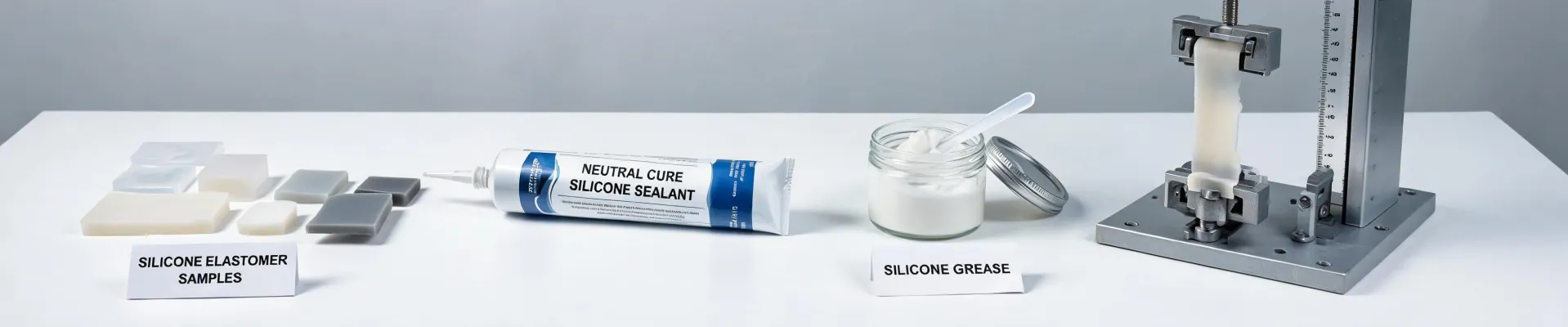
Our seals are silicone elastomer. To a polymer person, that distinction is basic chemistry. To a biomedical engineer, it's the difference between a seal that survives two years of reagent contact and one that's brittle in six months.
Silicone takes heat and cold better than most organic rubbers, shrugs off the reagents they were using, and can be formulated to meet ISO 10993-5 biocompatibility requirements (we referenced that standard's current edition as of February 2025—always verify before a regulatory submission). But it isn't universally "better." EPDM and neoprene often win on tear strength and price. For a device pumping buffer around a heated optics block, silicone was the right call. For someone else's application, it wouldn't be.
That's what I mean by getting the vocabulary right. "Rubber components" describes a shape. The chemistry decides whether the part survives what you're asking it to do.
Polypropylene tubes vs polystyrene tubes
Somewhere between the seal conversation and the sterilization plan, one founder asked about sample tubes: polypropylene tubes vs polystyrene tubes—which should they pick?
Here's the short version:
- Polypropylene takes heat (autoclavable), shrugs off most chemicals, and stays cheap. It's also translucent and a little flexible.
- Polystyrene gives you optical clarity, which matters if you're reading fluorescence through the wall. It's more brittle, doesn't like autoclaving, and can stress-crack around aggressive solvents.
Their analyzer used optical detection on one side and a heated centrifuge on the other, so they ended up with polystyrene for the read window and polypropylene for the tubes that got spun and heated. Completely normal split, and our silicone gaskets seal against both without complaint. Bottom line: you can't choose a tube until you know your sterilization route and your detection path.
(They asked the silicone company for opinions on plastic tubes. It wasn't the silliest question we got that quarter—top three, definitely.)
"Do you make the foam insulation too?"
Their building was mid-renovation while they set up the lab. The contractor had glazing work coming up and asked the startup to source "Dow Corning extruded polystyrene insulation." One founder typed up a purchase request without blinking.
I stopped them before they sent it. Dow Corning doesn't make extruded polystyrene (XPS) insulation. That's the broader Dow organization—the one that produces STYROFOAM-brand XPS boards. We make silicone: sealants, elastomers, medical-grade dispersions. The stuff that seals and protects. Not foam boards.
The mix-up is understandable, honestly. The names hang off the same family tree, and our sealants get installed right next to those boards on job sites daily. But "Dow Corning extruded polystyrene insulation" isn't a product. It's two different material chemistries from two separate companies fused into one search-friendly phrase.
What we do make for that job—and what their contractor eventually specified—is Dow Corning silicone 795, a one-part neutral-cure structural glazing sealant (you'll see it labeled DOWSIL 795 on newer packaging; same formulation). It meets ASTM C920 for structural glazing and weather sealing, and it bonds and seals fine adjacent to XPS. It just doesn't replace the board.
The Part I Have to Own
A week before their first big integration test, the founders called in a panic. Their pressure test was leaking, and the seals looked swollen—one had actually bulged out of its groove.
I still kick myself for not asking about their cleaning process on that first call. One question—"what are you using to clean the parts before assembly?"—would have saved us all a ton of rework.
If you've ever had a product fail days before a milestone, you know the specific nausea of that phone call.
We ran durometer and dimensional checks, then immersion tests. The seals had swollen about 12% by volume, and the surface had a sticky film. Our formulation wasn't the problem. It was the solvent. Someone on their assembly bench had borrowed a can of polyurethane cleaner from the construction crew—the aerosol kind used to dissolve uncured spray foam from tools and surfaces. They sprayed it on a rag and wiped down the injection-molded housings "to degrease them" right before pressing in the seals.
The residue attacked the silicone. Not destroyed it—swollen it, temporarily, in most cases. But in a sealing application, a 12% volume change is a failure. The same cleaner had also been wiped across a section of the glazing frame before the contractor ran the 795 bead. That section never bonded. On the building side, nobody noticed until the water test.
Both issues were fixable. The housings got a proper wipe-down with isopropyl alcohol, we sent replacement seals, and the glazing channel was cleaned down to bare aluminum and resealed with fresh 795. The device passed after a 72-hour cure.
The fix wasn't the hard part. What mattered is that the founders treated us like a partner rather than a vendor. They sent photos, followed our cleaning procedure, didn't argue about the cost of replacement seals. That behavior will get a small customer a long way with any supplier.
The incident changed our paperwork too. Every quotation for sealing components now includes a four-line surface preparation note. It reads like common sense, and it would have caught this problem before it cost them a week of schedule.
(The polyurethane cleaner, by the way, did exactly what it was designed to do to foam residue. It's a fine product for its intended use. The real failure was using a solvent you don't understand on a material you don't get to re-spec.)
What I'd Tell Anyone Waiting on a Quote
That same startup placed their first 50,000-unit order last month. The $1,840 sale turned into something bigger than revenue—it turned into trust, and it turned into a reference account.
It took me three years and a few hundred spec reviews to understand something obvious in hindsight: most quality failures aren't adversarial. Nobody sets out to contaminate a sealing surface or spec the wrong elastomer. They just don't have anyone to ask. The suppliers who win are the ones who make themselves askable.
Small doesn't mean unimportant. It means early. A company that shrugs at a $2,000 order is guaranteeing the $200,000 order goes to someone else when it eventually arrives—and it usually does.
So, from the other end of the quote:
- Tell us what the part does, not just what it's called. "Rubber components" tells me a shape. "Seals a heated buffer against a polypropylene tube for 10,000 cycles" tells me everything.
- Ask about cleaning and sterilization early. The most expensive mistake we see isn't the big material selection—it's the solvent that touches the surface right before assembly.
- If a product name confuses you, just ask. The "Dow Corning extruded polystyrene insulation" question took thirty seconds to resolve. I'd take that call over a failed field seal any day.
Here's the steady lesson: a spec is only the starting point. Quality is made or lost in the process around it—in the borrowed cleaner, the wiped glazing frame, the decision to call and ask. A contract can't protect you from any of that. Only asking questions can.
These days I ask a lot more of them. And I keep a folder for emails from small companies—modest quantities, serious questions. It's a useful reminder on the days when a 50,000-unit contract makes a $1,840 order look like it wasn't worth the paperwork.