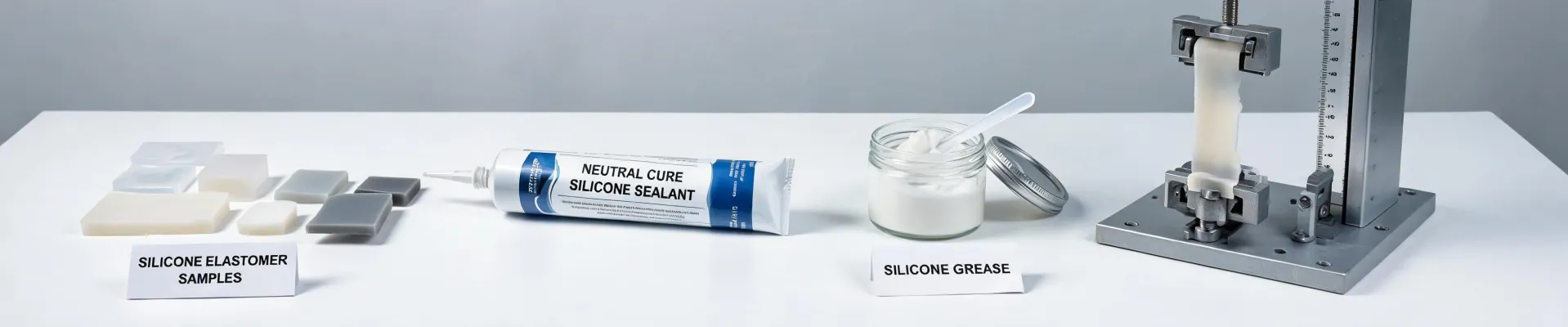
Let me state this clearly: Silicone is not plastic. If you've ever used the terms interchangeably, or worse, had a supplier or engineer tell you they're 'basically the same,' I need to have a serious word with you.
I'm a procurement specialist for a mid-sized industrial component manufacturer. In my 12 years, I've handled over 500 rush orders for molded parts, seals, gaskets, and tubing. And I've seen the fallout when someone assumes silicone and plastic are interchangeable. It's not pretty. It's expensive. And in the medical and food-processing sectors, it's potentially dangerous.
The confusion is understandable on the surface. Both silicone and plastics are polymers. Both can be molded, extruded, and colored. But chemically, they are fundamentally different, and that difference dictates everything from temperature tolerance to biocompatibility. Period.
What Makes Silicone Different From Plastic
The core distinction is the backbone structure. Most plastics (think polyethylene, polypropylene, nylon, PVC) have a backbone made of carbon-carbon bonds. Silicone, however, has a backbone of alternating silicon and oxygen atoms (siloxane). This is not a minor chemical trivia point. It has real-world consequences.
1. Temperature Tolerance
Standard plastics like polypropylene start to soften around 150°C (302°F). Nylon might handle a bit more, but it's still in a similar range. Silicone? Standard grades are stable from -55°C to +250°C, and specialty grades can go higher or lower.
I learned never to assume a 'high-temperature' plastic could handle the same as standard silicone after an incident in 2023. We had a spec for an oven door gasket. The client wanted a rubber-like seal. The engineer (not on my team, I should note) specified a 'high-temp' TPU. It failed within a month. The silicone alternative from Dow Corning? Still in service. That's not a competitor slam—that's chemistry.
2. Biocompatibility & Toxicity
This is where things get serious. Many plastics require plasticizers (like phthalates) to be flexible. These can leach out over time. Silicone typically doesn't use plasticizers. Its flexibility comes from the siloxane backbone itself. This is why medical-grade silicone is the gold standard for implants, feeding tubes, and baby bottle nipples. Is silicone the same as plastic in a medical context? Absolutely not.
The Practical Trap: Why Engineers and Buyers Confuse Them
Here's where I have mixed feelings. I don't blame someone new to materials for asking, 'is silicone the same as plastic?' It feels rubbery, it comes in a roll, it looks like some flexible plastics. It's an honest question.
But the trap happens in two scenarios:
- Scenario A: The Cost-Cutter. A manager sees a silicone part at $2.00 and a plastic part at $0.40. They say 'it's the same thing.' The result is a part that fails under heat or becomes brittle in UV light. (this was back in 2019 — I had a client who learned this the hard way with a failed roof seal).
- Scenario B: The Assumption Failure. Someone assumes 'same specifications' (like hardness or color) means identical performance across vendors. Didn't verify. Turned out each material reacted differently to the chemical environment.
Small Orders, Big Lessons (The Small Client Perspective)
When I was starting out, I remember calling a raw material supplier for 25 pounds of high-consistency silicone rubber. They laughed at me. 'Call us back when you want 500 kilos.' I ended up paying a premium from a smaller distributor.
That experience taught me a lesson: small doesn't mean unimportant. Small buyers are often the ones prototyping the next big product. They need the right material for their test, not a substitute. Today, when I hear a supplier dismiss a small order by saying 'just use plastic, it's the same,' I see a red flag. That supplier doesn't understand the materials they sell.
Does this mean plastic is bad? No. Plastic is fantastic for the right application. But silicone has a unique combination of properties—temperature stability, flexibility at extremes, chemical inertness—that no standard plastic can match. If you need a gasket for a cryo-valve or a seal for a steam sterilizer, you need silicone. There is no shortcut.
So, is silicone the same as plastic? No. And treating it like plastic is a costly mistake. Understand the chemistry, respect the application, and don't let someone with a spreadsheet convince you that a lower-cost alternative is a direct replacement. It often isn't. (mental note: I should write a follow-up on the specific ASTM tests we use to verify this—remind me).