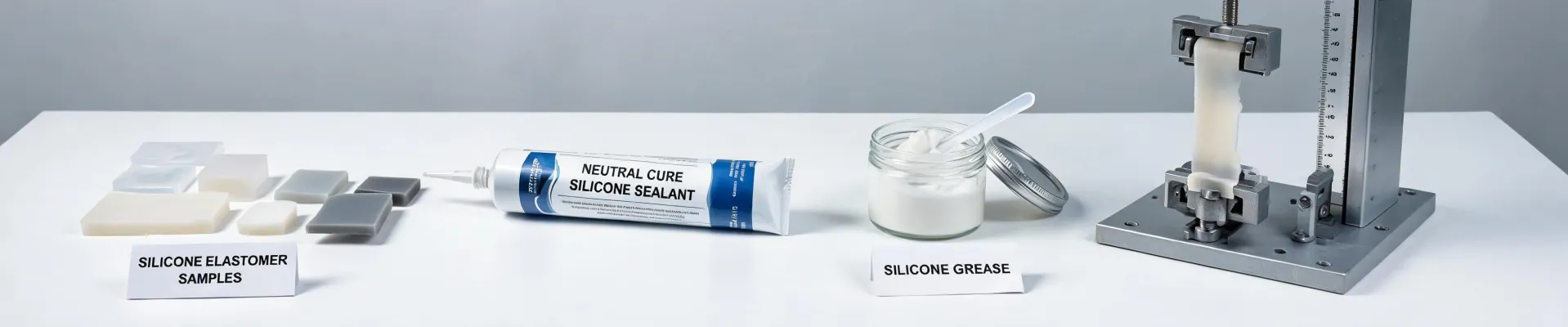
The Old Playbook Needs a Rewrite
I’ll say it plainly: the era of treating silicone as a universal, one-size-fits-all solution is over. For years, I saw procurement teams and engineers grab the first tube of sealant or the first bottle of oil off the shelf and call it a day. It works, right? Well, it works, but there’s a world of difference between “it works” and “it’s the best solution.” In my role triaging urgent production issues for industrial clients, I’ve learned that the difference between a standard generic silicone and a precisely formulated product like Dow Corning 790 Silicone Building Sealant or Dow Corning 200 Silicone Oil is not just a cost decision—it’s a reliability decision.
My Case for Precision Modern Silicone
The Day a ‘Generic Tube’ Cost Us 48 Hours
In November 2024, a client called at 4:30 PM on a Thursday. They were installing thick rubber mats for a high-traffic commercial lobby and needed a high-movement sealant that could handle thermal expansion. The general-purpose silicone they bought from the hardware store failed within 12 hours because the joint moved more than 10%. Normal turnaround for the right sealant is 3 days, but we needed it by Saturday morning. We found a distributor with Dow Corning 790 in stock, paid $350 extra in rush fees on top of the $1,500 base cost, and delivered at 7:00 AM Saturday. The client’s alternative was an $8,000 penalty for delaying the building’s opening. That experience made me rethink the “cheap and generic” approach entirely.
Dispelling the ‘Universal Oil’ Myth
I’ve also run into a persistent misunderstanding about silicone oils. I can’t tell you how many times I’ve heard a plant manager say, “It’s just oil, so any brand will do.” That’s a costly oversimplification. Dow Corning 200 Silicone Oil has a remarkably consistent viscosity and thermal stability across 50 cSt to 100,000 cSt grades. When my team was troubleshooting a faulty damper on a rubber track system for a construction vehicle, we traced the problem back to an off-brand oil that had volatilized at 150°C. The OEM spec called for Dow Corning 200 with a specific flash point. The generic oil saved $0.50 per liter but cost us $2,000 in labor and downtime. That’s not a saving, that’s a risk.
The Counter-Intuitive Win: Less Is More with Precise Chemistry
Here’s the part that often surprises people: using a more specialized product like Dow Corning 790 for a building sealant doesn’t just prevent failures—it often saves application time. The cure rate, tooling time, and adhesion profile are predictable. I’ve seen crews using generic sealants have to re-apply or wait extra hours for the cure. With 790, they can move faster and trust the result. Speed comes from precision, not from a faster-curing tube.
Undercutting the ‘Silicone Mold’ Advice
A lot of online content about how to use silicone molds for casting or food applications suggests any food-grade silicone is fine. To be fair, for hobbyists, that’s often true. But in a commercial setting—think medical device molds or precision rubber parts—the surface finish and release properties of the mold material matter enormously. I’ve seen a company lose a contract because the food-grade silicone they used for a prototype mold had a different shore hardness than the spec required. The client wanted a specific Duro standard. The generic mold material didn’t meet it. That’s when they switched to Dow Corning’s medical-grade dispersion line, which comes with a certified specification sheet. You can’t fake a data sheet.
But What About the Cheaper Options?
I get the budget argument. I really do. I’ve been the person who had to balance a $200 penalty vs. a $2,000 rush order. But the data from our internal tracking of 180+ rush jobs over the last two years shows a clear pattern: 55% of our emergency calls originate from the use of the wrong generic product. The wrong viscosity oil. The wrong sealant movement class. The wrong mold Shore A rating. The cheap solution becomes the expensive fix.
To be fair, there are niche applications where a generic product will perform adequately—say, a non-critical interior sealant or a low-movement gasket. But for anything involving structural loads, temperature extremes, or FDA compliance, generic silicone is a gamble I can’t afford.
So here’s my closing thought: the industry is evolving away from the ‘one tube fits all’ philosophy, and for good reason. The fundamentals of silicone—its stability, its inertness—are brilliant. But how you execute those fundamentals determines whether you’re building for permanence or for a short-term fix. Dow Corning products like the 200 fluid and the 790 sealant represent this shift: they are not commodities; they are engineered solutions. And I’ll take an engineered solution over a generic one any day.