-
Dow Corning Silicone Materials: 7 Questions Every Engineer Should Ask Before Their Next Project
-
1. What's the real difference between Dow Corning 732 and 737 silicone sealants?
-
2. Can I use Dow Corning medical-grade silicone for something it wasn't specifically tested for?
-
3. What's the best Dow Corning product for sealing electronics against moisture?
-
4. How do I know if a Dow Corning silicone will bond to my specific plastic?
-
5. Is Dow Corning silicone suitable for high-temperature gasketing?
-
6. What's the most common mistake when specifying thermoplastic polyurethane (TPU) versus silicone?
-
7. How should I compare foam board insulation with silicone-based building sealants for a construction joint?
-
1. What's the real difference between Dow Corning 732 and 737 silicone sealants?
Dow Corning Silicone Materials: 7 Questions Every Engineer Should Ask Before Their Next Project
If you're specifying silicone materials for an industrial or medical application, you've probably got a shortlist of questions. Maybe you're wondering whether Dow Corning 737 is the right sealant for a tricky assembly. Or if the thermal performance of a particular elastomer will hold up under continuous heat.
In my role coordinating materials for medical device and industrial clients—managing about 200+ rush orders over the last six years—I've fielded most of these questions more times than I can count. Here are the ones that actually matter, with answers that'll save you a costly re-spec later.
1. What's the real difference between Dow Corning 732 and 737 silicone sealants?
I get this one all the time, and the short answer is: it depends on what you need to stick together and how fast.
Dow Corning 732 is a general-purpose, one-part silicone sealant. It's acetoxy-cure, which means it releases acetic acid (vinegar smell) as it cures. It's tough, flexible, and works great for most industrial sealing jobs—gasketing, bonding, potting. Typical cure time is around 24 hours for a 1/8-inch section.
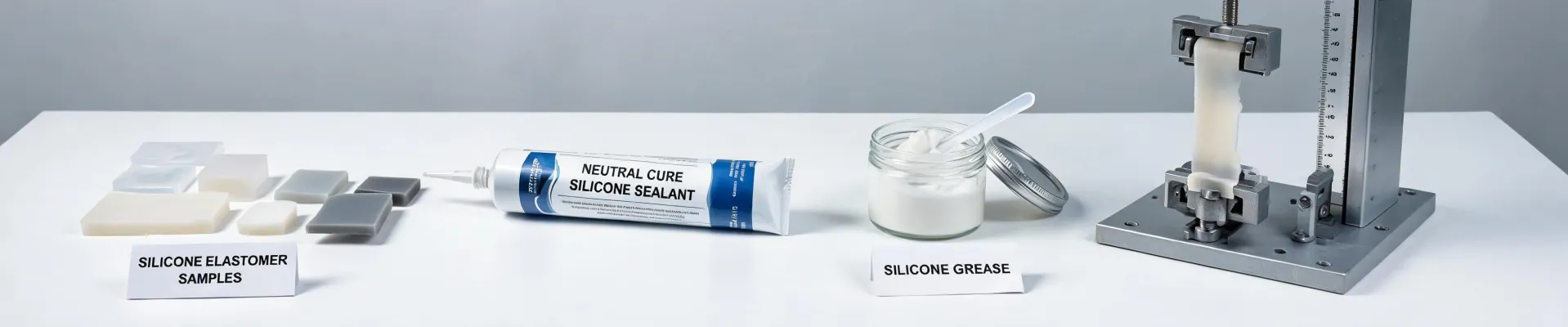
Dow Corning 737, on the other hand, is a neutral-cure sealant (no acetic acid), which makes it better for sensitive substrates—electronics, some plastics, anything that doesn't like acid. It also cures faster. If I remember correctly, it's tack-free in about 10-15 minutes versus 30-40 minutes for 732, and full cure is closer to 12 hours. But—and here's the catch—737 is generally a bit more expensive per unit volume.
So the decision really comes down to: does your substrate care about acid? And do you have 24 hours to wait?
2. Can I use Dow Corning medical-grade silicone for something it wasn't specifically tested for?
This is a classic rookie mistake (I made it myself in my first year). You see 'medical grade' on the datasheet and assume it's automatically the right choice for any medical-adjacent application. What most people don't realize is that 'medical grade' typically refers to biocompatibility under specific conditions—usually short-term contact with skin or tissue, or specific implant durations.
Dow Corning's medical-grade elastomers (like their SILASTIC™ line) are formulated for specific ISO 10993 testing protocols. If your application involves a different mode of contact—say, long-term implant versus 24-hour skin contact—the material may not have been tested for that specific use case. You'd need to verify with the manufacturer or commission additional testing.
In my experience, it's better to over-specify the testing requirement upfront than to assume 'medical grade' covers everything. I've seen a client lose a $25,000 prototype run because they assumed a general-purpose medical-grade silicone would pass a specific cytotoxicity test for a novel device. It didn't.
3. What's the best Dow Corning product for sealing electronics against moisture?
For potting and encapsulating electronics, the go-to is usually a two-part, addition-cure silicone like Dow Corning 184 or 186 silicone encapsulant. These are low-viscosity (they flow into tight spaces), and they cure without byproducts (no shrinkage). But here's something vendors won't always tell you: the choice between 184 and 186 often comes down to pot life and viscosity, not performance.
Dow Corning 184 has a longer pot life (about 2-3 hours at room temperature) and lower viscosity (around 3500 cP). Dow Corning 186 is thicker (about 7500 cP) and cures faster (pot life around 45 minutes). If you're potting a dense assembly with lots of sharp components that could trap air, go with 184—the longer flow time helps release bubbles. If you're doing a simple, open potting with good access, 186 might save you time.
For conformal coatings (thin protective layers), you'd look at Dow Corning 1-2577 or similar. That's a different category entirely—it's a flowable, UV-indicating coating that cures to a tough, flexible film.
4. How do I know if a Dow Corning silicone will bond to my specific plastic?
Short answer: you probably need a primer or surface treatment. Silicones are inherently non-stick (that's why they're great for release coatings). Getting them to bond to a plastic substrate requires some prep.
The Dow Corning general guideline is: for high-energy surfaces (glass, metals, some engineering plastics like polycarbonate), an automated primer like Dow Corning 1200 OS or a corona/plasma treatment often works well. For low-energy surfaces (polyethylene, polypropylene, PTFE), you're looking at mechanical abrasion plus primer, or switching to a different adhesive system entirely.
What most people don't realize is that 'bonds to plastic' on a datasheet is often tested on a very specific plastic under ideal lab conditions. Real-world performance depends on the exact grade of plastic, its surface energy, any mold release agents still present, and the cleanliness of the part. I've seen a project fail because someone assumed a sealant that bonded to injection-molded ABS would work on machined ABS—the surface finish was completely different.
In my opinion, the safest approach is to get a sample, prep the surface per Dow Corning's recommendations, and do a 90-degree peel test on your actual parts. It takes a few hours but can save you from a redo that costs weeks.
5. Is Dow Corning silicone suitable for high-temperature gasketing?
It depends on what you mean by 'high temperature.' If you're talking about continuous service at 200°C (392°F) in an oven door or industrial furnace, yes, many Dow Corning silicones can handle that. Their general-purpose sealants (like 732) are rated for continuous service from -60°C to 204°C, with intermittent peaks up to 232°C.
But if you need continuous service above 250°C (482°F)—say, in an exhaust manifold or catalytic converter—then standard silicones start to degrade. The polymer backbone breaks down. You'd need a specialist silicone formulation designed for extreme heat, like a fluorosilicone or a phenyl-containing silicone. That's a different product family altogether.
And here's a real-world consideration: temperature cycling matters more than peak temperature. A gasket that sees 200°C for 8 hours, then cools to room temperature overnight, then heats up again, will fail faster than one that stays at 200°C continuously. The thermal expansion stresses the bond line. Dow Corning has good data on this, but it's not always on the standard datasheet. Ask your technical rep for the thermal cycling test report, if one exists for your specific application.
6. What's the most common mistake when specifying thermoplastic polyurethane (TPU) versus silicone?
Ah, this is a good one. The mistake is thinking they're interchangeable because they're both 'soft' materials. They're chemically different and have very different property profiles.
Silicones are generally better for: high-temperature resistance (continuous up to 250°C+ in some grades), low-temperature flexibility (down to -100°C for some), UV and ozone resistance, and biocompatibility in medical applications. They also have inherent release properties (things don't stick to them).
TPUs are generally better for: abrasion and wear resistance (silicones are notoriously soft), tensile strength and tear strength (some TPUs can be 10x stronger than a typical silicone), and oil/grease resistance (silicones swell in many hydrocarbons).
The classic mistake I've seen: specifying a silicone seal in a hydraulic system that sees mineral oil. The silicone swells, loses integrity, and leaks. (Thankfully, I learned this one from a colleague's failure, not my own.)
7. How should I compare foam board insulation with silicone-based building sealants for a construction joint?
These aren't really competing products—they serve different functions in the same assembly. Foam board insulation (like XPS or polyiso) provides thermal resistance (R-value). Silicone building sealants provide movement accommodation and weathersealing at the joints between those panels.
But... here's what many people overlook: the sealant's movement capability must match the expected joint movement. A building sealant rated for ±25% movement can handle a joint that opens and closes 25% of its original width. If the joint is 1/2 inch wide and the sealant is rated for ±25%, the maximum movement it can accommodate is 1/8 inch in either direction.
Dow Corning offers building sealants with movement ratings from ±12.5% (standard) up to ±50% (high-movement systems like Dow Corning 790). For a foam board insulation joint in a climate with significant temperature swings, I'd typically recommend at least a ±25% rated sealant, and ideally ±50% if the joint width is large or the movement is unpredictable.
In my experience, saving 10 cents per linear foot on a lower-rated sealant is not worth the risk of a joint failure that costs $1,000+ to repair (unfortunately, I've been on that side of the equation).